Lafayette College alumni and current students across multiple disciplines have received fellowships and an honorable mention as part of the National Science Foundation’s (NSF) prestigious Graduate Research Fellowship Program.

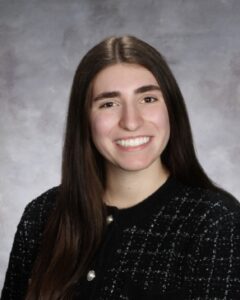
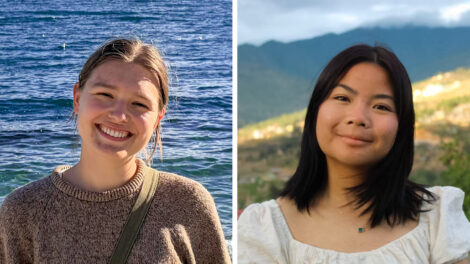
Sarah Sergi ’26 | contributed photo. The NSF Graduate Research Fellowship will support my goals by providing flexibility in pursuing diverse research opportunities, enabling me to further strengthen my research skills while engaging in STEM outreach. The Lafayette Chemical and Biomolecular Engineering department has been instrumental in preparing me for a career in research, continuously providing me with a supportive and collaborative community, as well as various professional opportunities, such as attending national conferences to present my research. My research experiences with Prof. Melissa Gordon in the Polymer’s Lab have further strengthened this preparation, as her mentorship has enabled me to develop skills in laboratory research, scientific writing, and effective communication. Professor Gordon has been extremely supportive throughout my undergraduate education, helping me prepare statements for graduate school and the NSF GRFP application. My academic advisor, Prof. Ryan Van Horn, has also been influential throughout my time at Lafayette, providing me with academic and career advice that has shaped me professionally and personally. I am very grateful for all of the support and opportunities that Lafayette College has provided me with, and I look forward to carrying all I have learned here into my graduate education and beyond.

Sarah Sergi ’26 | Contributed photo

Sarah Sergi ’26 (chemical engineering, awarded in material science engineering; research with Melissa Gordon ’11, associate professor of chemical and biomolecular engineering) will be attending Cornell University’s Ph.D. program in biomedical engineering, with a research focus in immunoengineering. She plans to pursue a career as a research scientist at a biotechnology company and hopes to contribute to the development of new therapeutics.

“The NSF Graduate Research Fellowship will support my goals by providing flexibility in pursuing diverse research opportunities, enabling me to further strengthen my research skills while engaging in STEM outreach,” she says. “The Lafayette Chemical and Biomolecular Engineering department has been instrumental in preparing me for a career in research, continuously providing me with a supportive and collaborative community, as well as various professional opportunities, such as attending national conferences to present my research.”

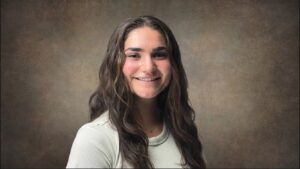
Katherine Mary Pappas ’26 (biochemistry, awarded in bioengineering; research with Prof. Gordon) will be attending University of Pennsylvania’s Ph.D. program in cell and molecular biology within its gene therapy and vaccine program.

"My experiences at Lafayette have been fundamental in fully developing me into an independent researcher and have prepared me with the interdisciplinary training required for conducting the research I am interested in. The freedom Lafayette has given me to be able to be a biochemistry major while working on research in the chemical engineering department was what allowed me to realize I wanted to go into translational, biomedical research and provided me with the tools to do so. However, it is my faculty mentors who have supported and prepared me the most to achieve my goals. The faculty members here at Lafayette have always fostered my intellectual curiosity, helping me to develop a love for learning that will carry me through the challenges I will face as I strive to reach my goals. Specifically, my research advisor, Prof. Melissa Gordon, has been instrumental in shaping my scientific trajectory. She has taught me how to develop my own research questions and guided me on the proper way to approach them, a skill that will carry me through grad school and beyond. She has encouraged me to face my research with curiosity, resilience, and adaptability. She has also given me the space to explore and pursue our research with passion and created an environment that encourages independence and trust, allowing me to develop confidence and grow into an independent scientist. I would not have been able to achieve such an honor without her as a mentor and I know that I can confidently head into my future as a scientific researcher because of the knowledge and support I have gained while working under her."

Katherine Mary Pappas ’26 | Contributed photo

Her goal is to join a lab at Penn that conducts immunotherapy research for her doctoral research. While Pappas is committed to a career conducting medical research thereafter, she is exploring whether to pursue a path in academia or industry after graduate school and looks forward to learning more about each career option and discovering the best fit as she continues her education.

“The process of applying for the NSF GRFP alone was a valuable experience that introduced me to investigating and developing my own research project, preparing me for graduate-level research,” Pappas says. “Receiving the GRFP award will play a transformative role in my graduate education and help me succeed in achieving my goals. The fellowship will provide me with significant flexibility and research autonomy when choosing my thesis lab and future research topics. The fellowship’s financial support will allow me to take greater scientific risks and develop as an innovative and self-directed researcher, preparing me for success in both academia and industry. Additionally, the recognition associated with the GRFP will facilitate connections with leading scientists in my field.”

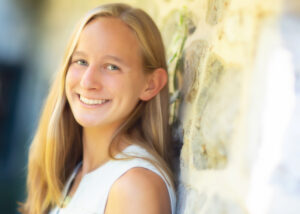
Kira Elizabeth Marr ’26 (mechanical engineering, awarded in mechanical engineering; research with Brent Utter ’06, associate professor of mechanical engineering) will be attending Carnegie Mellon University’s Ph.D. program in mechanical engineering studying beaded metamaterials in Prof. Trevor Jones’ Mechanically Intelligent Engineered Structures Laboratory (MInEnS).

"I conducted research the summer after my first year through the Clare Boothe Luce program. Through this, I worked with Prof. Brent Utter to study the effects of annealing on 3D-printed force sensors, eventually publishing a journal article about the research. This experience made me fall in love with the research process, and it jump-started my path to a Ph.D. Since that first summer of research, Prof. Utter has become a role model for me and has given me academic support and advice through years of research and classes. He is now my senior thesis advisor and has helped me with my graduate school applications, my NSF grant proposal, and in becoming a more effective and experienced researcher. Many other professors have been role models for me throughout my time at Lafayette. Dean (Jenn) Rossmann, my fluid mechanics professor, placed emphasis on the human side of engineering and on balancing life and art with academics. She was also influential in my time at Lafayette as a prominent woman in STEM. Prof. Derek Smith was my faculty advisor on the Bonn study abroad program and has become someone who I can ask for career advice and to read over my applications and proposals. These professors, along with many others, are examples of who I want to be as a graduate school TA and eventually as a professor myself. In my four years here, Lafayette has given me the tools to be an effective researcher, the confidence that I am capable of high-level work, and experience with professors who truly care about their students on an academic and personal level."

Kira Elizabeth Marr ’26 | Contributed photo

After she earns her Ph.D., she plans to become a professor of mechanical engineering, possibly at a school like Lafayette.

“Receiving the NSF GRFP has given me security of funding for the first several years of my Ph.D. that will allow me to focus on research,” she says. “It has also given me freedom of choosing my own projects and creating my own research paths. Though I plan on starting my Ph.D. with a project the MInEnS lab is already working on, I can branch out into directions of interest as I discover them. My time at Lafayette has played a large role in my career choice.”

Daphna Fertil ’22 (chemical engineering, awarded in bioengineering; currently at Drexel University pursuing a Ph.D. in bioengineering and biomedical engineering; worked with Joe Woo, associate professor of chemical and biomolecular engineering) has a long-term career goal to develop innovative biomaterial-based therapies within the biotechnology industry to modulate immune responses and improve patient outcomes.

"My journey to this point was made possible by the strong foundation I built at Lafayette. The career services office played a key role in helping me identify and pursue opportunities in research. In particular, my research experience with Joseph Woo provided me with essential technical and analytical skills," she adds. "Under his mentorship, I developed confidence in presenting my research at national conferences and strengthened my scientific writing through the completion of my senior thesis. Even after graduation, Dr. Woo has remained a valued mentor, continuing to support my professional development. I am deeply grateful for the mentorship and opportunities provided by the Lafayette community, which have been pivotal in shaping my path toward a career developing biomaterial therapies in industry."

Daphna Fertil ’22 | Contributed photo

After graduating from Lafayette, Fertil had the opportunity to work at the National Institutes of Health, where her research focused on the intersection of immunology and biomaterials. This experience solidified her interest in immune engineering and motivated her to pursue a Ph.D. in bioengineering at Drexel University, where she is conducting research in the Tissue Instructive Materials Laboratory and designing biomaterials that can precisely regulate inflammatory responses.


“The NSF Graduate Research Fellowship Program will be instrumental in helping me achieve these goals by supporting the development of innovative biomaterial therapies and strengthening my research capabilities,” Fertil says. “The fellowship will also provide the flexibility to explore translational aspects of my work and engage with local communities, further preparing me for a career in industry where both scientific innovation and real-world impact are essential.

An honorable mention went to Beck Knittel ’25 (geology, awarded in geoscience; currently at Lehigh University pursuing a master’s degree in earth and environmental sciences; worked with Tamara Carley, associate professor of geology and environmental geosciences).

“Congratulations to our students and alumni who have been recognized for their research by the National Science Foundation’s prestigious and highly competitive Graduate Research Fellowship Program,” says Julia Goldberg, associate dean of advising and co-curricular programs and director of Lafayette’s Scholarships and Fellowships Office.

“It’s another opportunity to celebrate the quality of our students, the meaningful mentorships at Lafayette College, and the graduate-level experience students enjoy within the intimacy of our undergraduate community working alongside knowledgeable, successful faculty who are experts in their fields,” Goldberg adds.

The NSF will award 2,500 Graduate Research Fellowships for the 2026-27 academic year to outstanding graduate students across the United States who are pursuing research-based degrees in science, technology, engineering, and mathematics (STEM) as well as the social sciences.

Offer recipients were selected from a highly competitive pool of nearly 14,000 applicants nationwide, representing all 50 U.S. states, the District of Columbia, and Puerto Rico, based on their intellectual merit and broader impacts, including their potential to contribute to scientific innovation.

The NSF Graduate Research Fellowship Program (GRFP) is one of the nation’s most prestigious fellowship programs, providing three years of financial support, over five years, to graduate students who have demonstrated potential for significant achievements in research. For more than 75 years, GRFP has played a critical role in developing the talent pipeline required for sustaining U.S. leadership in science.

Since its inception in 1952, GRFP has supported more than 70,000 graduate research fellows, many of whom have gone on to become leaders in research and innovation. By recruiting and supporting outstanding students with exceptional potential for leadership in STEM, the program has spurred scientific breakthroughs and economically significant innovations, with more than 40 former fellows having received Nobel Prizes.

View the full list of this year’s fellowship offer recipients and honorable mentions.

Hear more from the recipients:

Sarah Sergi '26

“My research experiences with Prof. Melissa Gordon in the Polymers Lab have further strengthened this preparation, as her mentorship has enabled me to develop skills in laboratory research, scientific writing, and effective communication. Prof. Gordon has been extremely supportive throughout my undergraduate education, helping me prepare statements for graduate school and the NSF GRFP application. My academic advisor, Prof. Ryan Van Horn, has also been influential throughout my time at Lafayette, providing me with academic and career advice that has shaped me professionally and personally. I am very grateful for all of the support and opportunities that Lafayette College has provided me with, and I look forward to carrying all I have learned here into my graduate education and beyond.”

Katherine Mary Pappas ’26

“My experiences at Lafayette have been fundamental in fully developing me into an independent researcher and have prepared me with the interdisciplinary training required for conducting the research I am interested in. The freedom Lafayette has given me to be able to be a biochemistry major while working on research in the chemical engineering department was what allowed me to realize I wanted to go into translational, biomedical research and provided me with the tools to do so. However, it is my faculty mentors who have supported and prepared me the most to achieve my goals. The faculty members here at Lafayette have always fostered my intellectual curiosity, helping me to develop a love for learning that will carry me through the challenges I will face as I strive to reach my goals. Specifically, my research advisor, Prof. Melissa Gordon, has been instrumental in shaping my scientific trajectory. She has taught me how to develop my own research questions and guided me on the proper way to approach them, a skill that will carry me through grad school and beyond. She has encouraged me to face my research with curiosity, resilience, and adaptability. She has also given me the space to explore and pursue our research with passion and created an environment that encourages independence and trust, allowing me to develop confidence and grow into an independent scientist. I would not have been able to achieve such an honor without her as a mentor and I know that I can confidently head into my future as a scientific researcher because of the knowledge and support I have gained while working under her.”

Kira Elizabeth Marr ’26

“I conducted research the summer after my first year through the Clare Boothe Luce program. Through this, I worked with Prof. Brent Utter to study the effects of annealing on 3D-printed force sensors, eventually publishing a journal article about the research. This experience made me fall in love with the research process, and it jump-started my path to a Ph.D. Since that first summer of research, Prof. Utter has become a role model for me and has given me academic support and advice through years of research and classes. He is now my senior thesis advisor and has helped me with my graduate school applications, my NSF grant proposal, and in becoming a more effective and experienced researcher. Many other professors have been role models for me throughout my time at Lafayette. Dean Jenn Rossmann, my fluid mechanics professor, placed emphasis on the human side of engineering and on balancing life and art with academics. She was also influential in my time at Lafayette as a prominent woman in STEM. Prof. Derek Smith was my faculty adviser on the Bonn study abroad program and has become someone who I can ask for career advice and to read over my applications and proposals. These professors, along with many others, are examples of who I want to be as a graduate school TA and eventually as a professor myself. In my four years here, Lafayette has given me the tools to be an effective researcher, the confidence that I am capable of high-level work, and experience with professors who truly care about their students on an academic and personal level.”

Daphna Fertil '22

“My journey to this point was made possible by the strong foundation I built at Lafayette. The career services office played a key role in helping me identify and pursue opportunities in research. In particular, my research experience with Joseph Woo provided me with essential technical and analytical skills,” she adds. “Under his mentorship, I developed confidence in presenting my research at national conferences and strengthened my scientific writing through the completion of my senior thesis. Even after graduation, Dr. Woo has remained a valued mentor, continuing to support my professional development. I am deeply grateful for the mentorship and opportunities provided by the Lafayette community, which have been pivotal in shaping my path toward a career developing biomaterial therapies in industry.”
Categorized in: Academic News, Chemical and Biomolecular Engineering, Featured News, Geology, Mechanical Engineering, News and Features, Scholarships and Fellowships