Reunion 2026
- Engage with your own history at Lafayette by registering for Reunion, June 5 through June 7. All alumni are welcomed back to celebrate the Bicentennial during Reunion!
By Bryan Hay
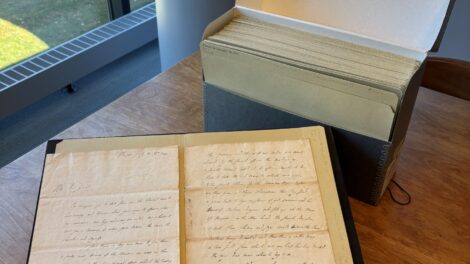
Lafayette College archivists, students, and print and copy services staff have teamed up to digitize all yearbooks, releasing into an accessible format a rich trove of campus history and images for alumni, students, staff, researchers, and genealogists.
And just in time for Reunion in early June, alumni can look back on classmates and campus memories from their eras by perusing complete and searchable digitized yearbooks from 1970 to the present, with the earlier issues coming in the final phases of the project. While on campus for Reunion, they can help open storage space in Special Collections by picking up free surplus yearbooks in Skillman Café.
When the project, started in 2023, wraps up later this year, 130 yearbooks from 1870 to present will be digitized and accessible.
Lafayette’s first yearbooks in the 1870s went through different iterations, with names such as The Pearl, The Mirror, and Miscellany, until the final adoption of the The Mélange in 1879. No yearbooks were published in 1945 and 1946 because of World War II.
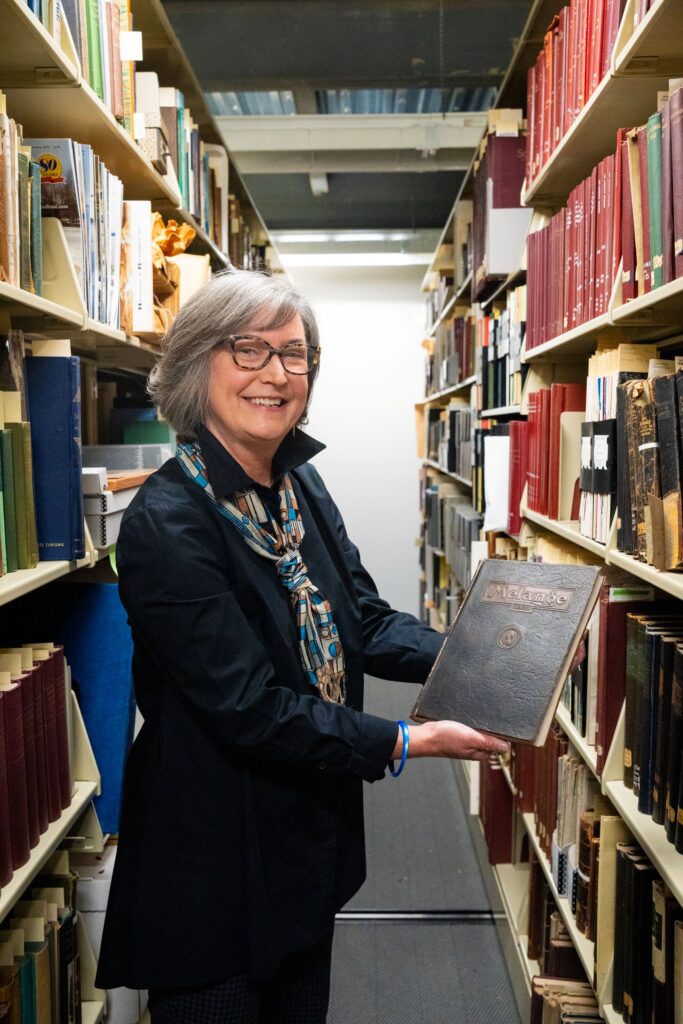
“A treasure on our shelves,” says Elaine Stomber, co-director of Special Collections and College Archives and College Archivist, carefully handling a 1921 Mélange. (Photo | JaQuan Alston)
“I think of this as a treasure on our shelves,” says Elaine Stomber ’89, P’17,’21, co-director of Special Collections and College Archives and College Archivist, as she sorted through vintage copies of 19th century yearbooks. She relishes pointing out how binding, book dimensions, illustrations, artwork, campus information, typography, photography, and campus scenes and culture have evolved over the decades as reflected in the pages of each volume.
“Now this treasure is available to anyone,” she says.
Before digitization of the yearbooks, visitors seeking information about a relative or friend who attended Lafayette would have needed to reach out to Special Collections staff, who would research and provide the requested content.
“Now, anybody can go online, search someone’s name, and be able to find all that information very easily, then very quickly download it and print it if they’re interested,” Stomber explains. “For me, that’s just a huge gift to our alumni.”
Stomber credits the success of the project, which involved scanning and coding endless pages, to a dedicated interdepartmental team. It has included Bicentennial Fellows Abby Nam ’27 and Tobias Trigg ’28; student workers Katie Felsmann ’26 and Bay Malone ’27; Missy Nerino, archivist, Special Collections and College Archives; Beth Sica, archives technician; Nora Zimmerman, digital archivist and head of repository strategies; Dave Huber, manager of mail and print services; and Bob Burghardt, printing technician.
In the print shop, Huber and Burghardt lightened the load for their Skillman colleagues by using a hydraulic slicer to cut the spine off more than 125 surplus Mélange yearbooks, making the pages easier to copy on a flatbed scanner. Sica served as liaison between Special Collections and College Archives, carting yearbooks over to Huber and Burghardt at Farinon Student Center.
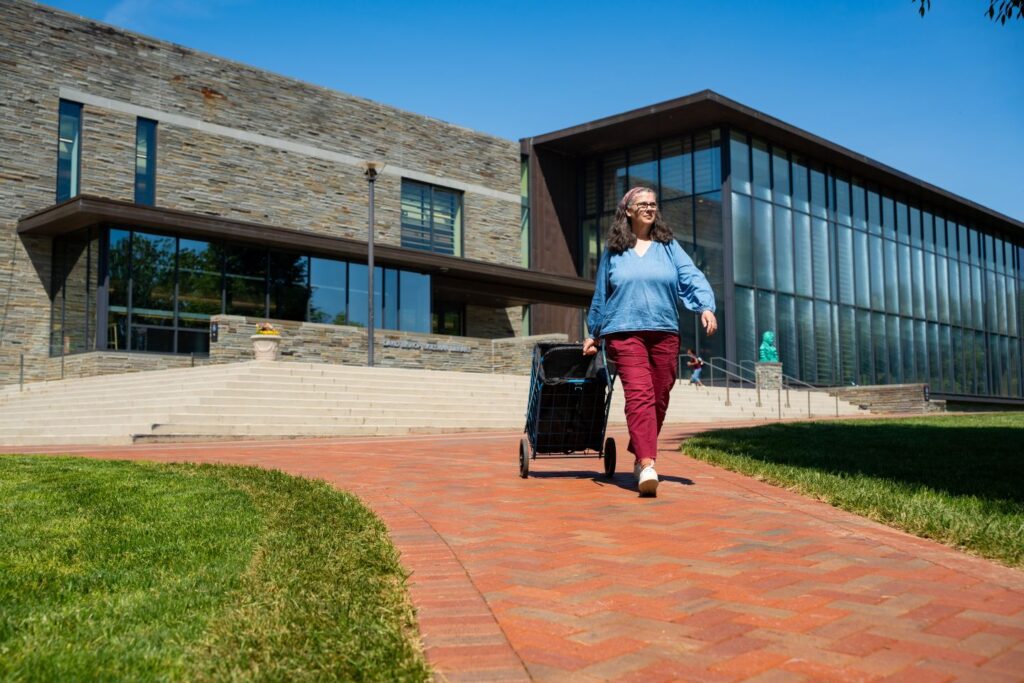
Beth Sica, archives technician, takes a cart of yearbooks across the Quad to print services. (Photo | JaQuan Alston)
“It was a fun job. While cutting the yearbooks we paged through and looked at many old photos of the campus and students, and learned a little history of the College,” Huber says. “It was great to collaborate with Special Collections to keep this process of digitizing the yearbooks in-house to ensure safe keeping of irreplaceable history.”
“Hey, that’s my mom!”
While tedious and time consuming, the process of scanning endless pages has provided moments of surprise and joy.
Asked if she encountered any particular yearbook that stood out to her, Felsmann breaks out into a huge smile and says “yes, 1993, because that was my mom’s (Elizabeth (O’Rourke) Felsmann, psychology) yearbook.”
“So, I got to scan it, Facetimed her immediately, and shared that I found her photo and her friends, all of these Lafayette people I know so well. It was so cool that the 1993 Mélange came to me to scan,” she says.
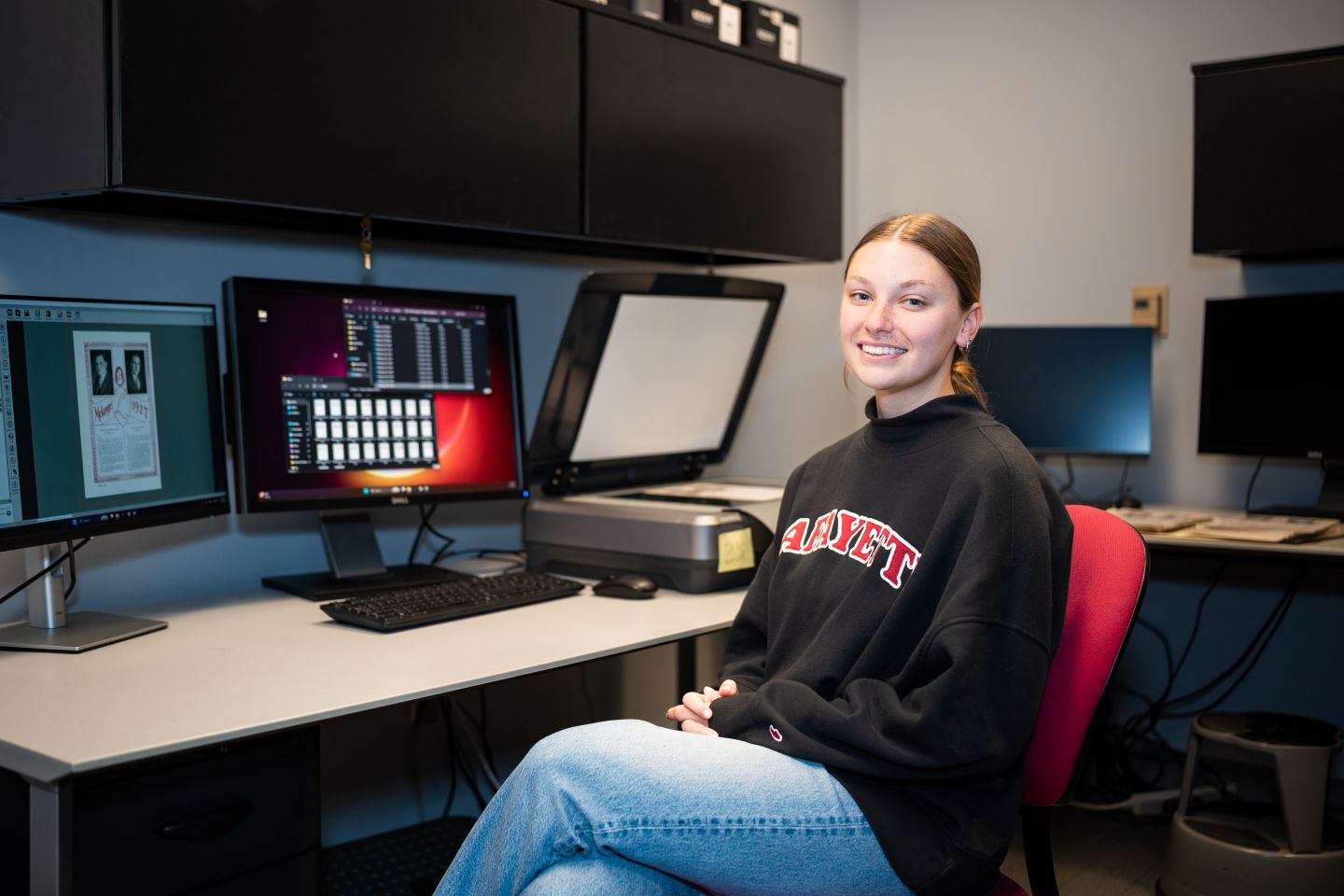
By happenstance, Katie Felsmann ’26, who has been assisting with the project, encountered her mom’s yearbook and called her immediately. (Photo | JaQuan Alston)
Perusing yearbooks animates the Lafayette experience
“The project shows that Lafayette definitely has deep appreciation for basically everybody who has attended here, because every book is so well preserved, and we have a database of everyone who’s come here, and every single club, every single organization,” adds Felsmann, a psychology and art history major.
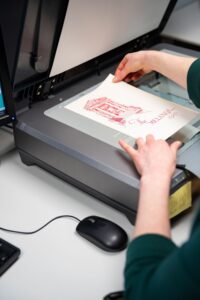
A 1927 Mélange is positioned for scanning. (Photo | JaQuan Alston)
“With all of this information now available for any student and any community member, you can go online and find whatever information you want from the yearbooks,” she says.
Having so much exposure to the yearbooks, dating back to 1870, provided Nam with a fuller, more intimate picture of the changes and continuities within the campus culture at Lafayette.
“Something I’ve enjoyed working with the older yearbooks is finding that they still have advertisements at the very end from local businesses,” she observes. “Being able to capture the evolution of the Mélange as it moved from handmade illustrations, to black-and-white pictures, to color photographs for posterity is a huge honor.”
For Nerino, who joined the Special Collections and College Archives staff last year, the project helped her get better acquainted with the College leading up to the Bicentennial.
“It has been so helpful to have this project,” she says, noting she’s still in regular contact with many researchers and eager to share that the yearbook digitization project should be completed by year’s end.
“It’ll be completed very soon, and it is going to be a wonderful resource, a place to learn so much about the College,” she says. “I’m working with students from The Lafayette right now who are working on a special Bicentennial issue, and the yearbook is one of the first places they can go to look and learn about sports, our extracurricular activities, and the students themselves.
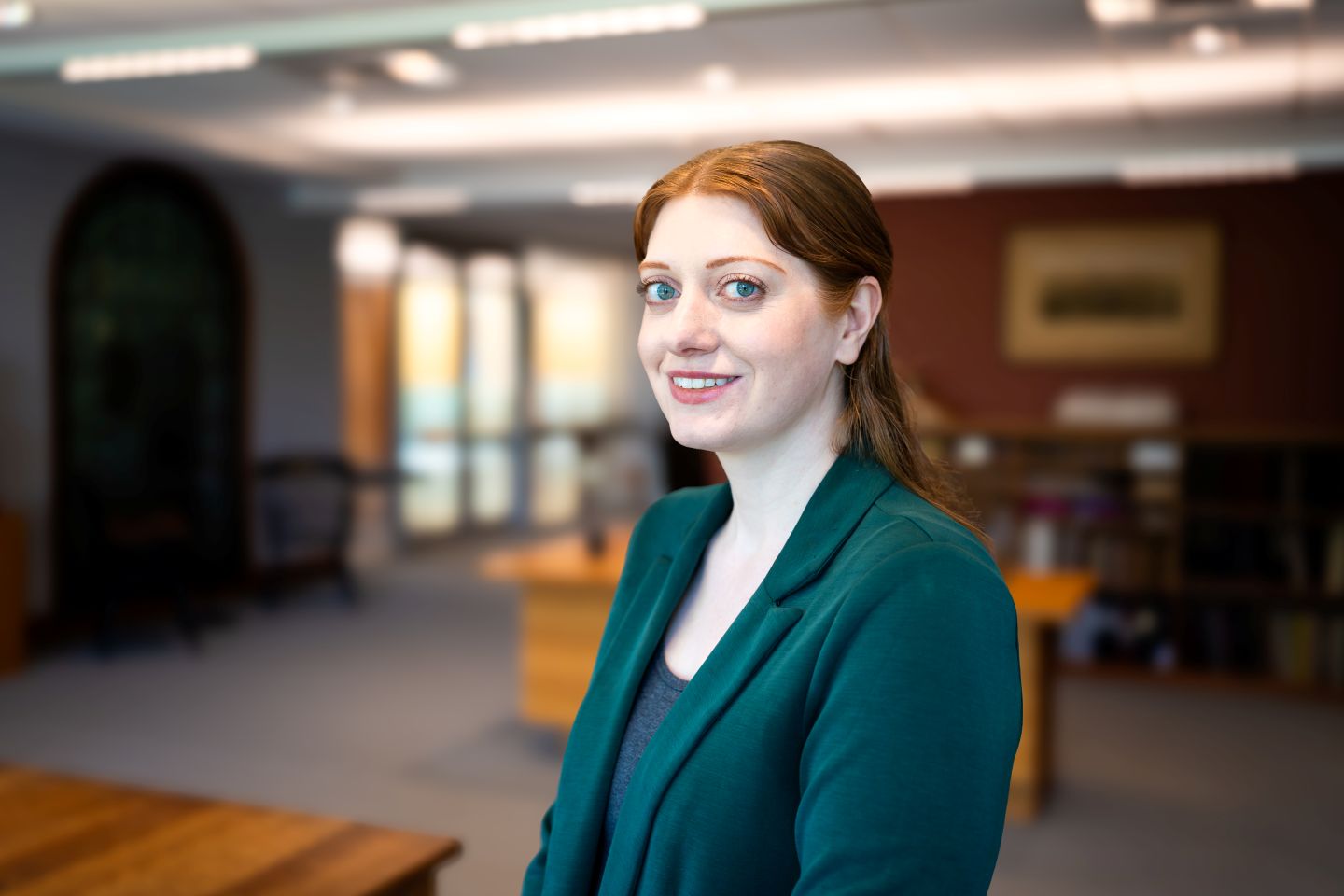
Missy Nerino, archivist. (Photo | JaQuan Alston)
“Looking at all these yearbooks has just been fantastic to learn about the culture of Lafayette and how it’s changed, but also how a lot of things have stayed the same over time,” Nerino says. “Now the world can see our story through these incredible pages of history.”