Hank Cauley ’77 to deliver Resnik Memorial Lecture at 7:30 p.m. Oct. 27 in Colton Chapel
Hank Cauley ’77 will deliver the Resnik Memorial Lecture at 7:30 p.m. Oct. 27 in Colton Chapel, presenting “Climate Justice Solutions and Global Impact: A Lafayette Engineer’s Journey.” The event is free and open to the public.
From managing refugee programs in Somalia to steering multimillion-dollar global sustainability initiatives, Cauley has been driving change at the intersection of conservation, business, and capital for more than four decades.
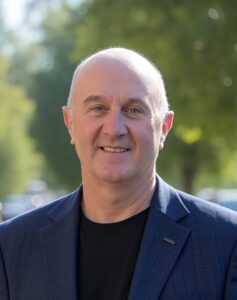
Hank Cauley ’77 | contributed photo
In this talk, he will share stories from across this path—moments of clarity, hard failures, and necessary compromises—and the insights he’s drawn from each. He’ll make the case that an engineering degree is not a narrow track but a foundation flexible enough to carry a career anywhere purpose leads it, and he’ll leave students with practical ways to think about their own first steps: How to recognize the transferable skill underneath the credential, how to find work to impact real people, how to create and manage teams to take on complex challenges, and how to build a career that stays enjoyable along the way.
An institutional builder and board-level leader, Cauley holds a B.S. degree in chemical engineering from Lafayette, an M.S. degree in chemical engineering from University of Arizona, and an MBA from Harvard Business School, a combination underpinning his practical, data-driven approach to environmental oversight.
“My Lafayette ChemE degree gave me two things: a way of breaking problems into manageable pieces and the confidence to take anything on,” Cauley says. “That foundation carried me from refugee camps, to boardrooms, to co-founding a social justice organization from scratch.
“I have had an eclectic career built on an engineering foundation, and Lafayette is at the heart of it,” he says.
Cauley is co-founder and former CEO of Nature for Justice, guiding mission-driven efforts to leverage nature-based solutions for climate resilience and community empowerment. Previously, he co-built and managed the $12 million Wild Australia program at The Pew Charitable Trusts, contributing to current outcomes of 25% of the continent’s lands protected and 26% on the oceans (in highly protected marine sanctuaries).
Cauley served as senior vice president at Conservation International, managing a 30-person team and influencing over $150 million in sustainability partnerships across agriculture, extractives, and consumer goods.
He also reorganized the U.S. Forest Stewardship Council as its president, raising nearly $20 million and strengthening its position as the leading global certification standard for sustainable forestry, and he advised and served on founding boards for pioneer impact organizations, including the Aquaculture Stewardship Council and Root Capital.
Sponsored by the Engineering Division, the Resnik Memorial Lecture is named in honor of Astronaut Judith A. Resnik, an electrical engineer who lost her life in the Challenger space shuttle disaster on Jan. 28, 1986. The event is sponsored by the John and Muriel Landis Lecture Fund and the Farber Memorial Endowment Fund for the Resnik Memorial Lecture series.