November 11, 2026
ECE students help bring automation to LaFarm
By Bryan Hay
Onions, shallots, garlic, snapdragons, and other flowers grown in one of the greenhouses at LaFarm will enjoy improved growing and curing conditions thanks to an interdepartmental sustainability project with the Electrical and Computer Engineering Department.
Students in ECE 491, in which electrical and computer engineering seniors are introduced to team-based projects, have been working this fall on FARMSENSE, a solar-powered platform designed to fully automate the greenhouse–everything from irrigation to plant drying and curing.
A self-regulating control system with sensors will allow LaFarm staff to remotely adjust the temperature and humidity inside the greenhouse, depending on the requirements of the plants and crops being grown. The goal is to have the system operational by the end of spring semester.
“I’ve enjoyed working on a substantial project, backed by a large budget and with a team of students I’ve known for several years,” says Fletcher Crean ’27 (electrical and computer engineering) during one of the regular LaFarm field visits to gather information and specifications. “This project has only brought us closer because we’re meeting all the time to plan it. I also like being on the farm and working on sustainability, because it’s something I’m passionate about and think is important.”
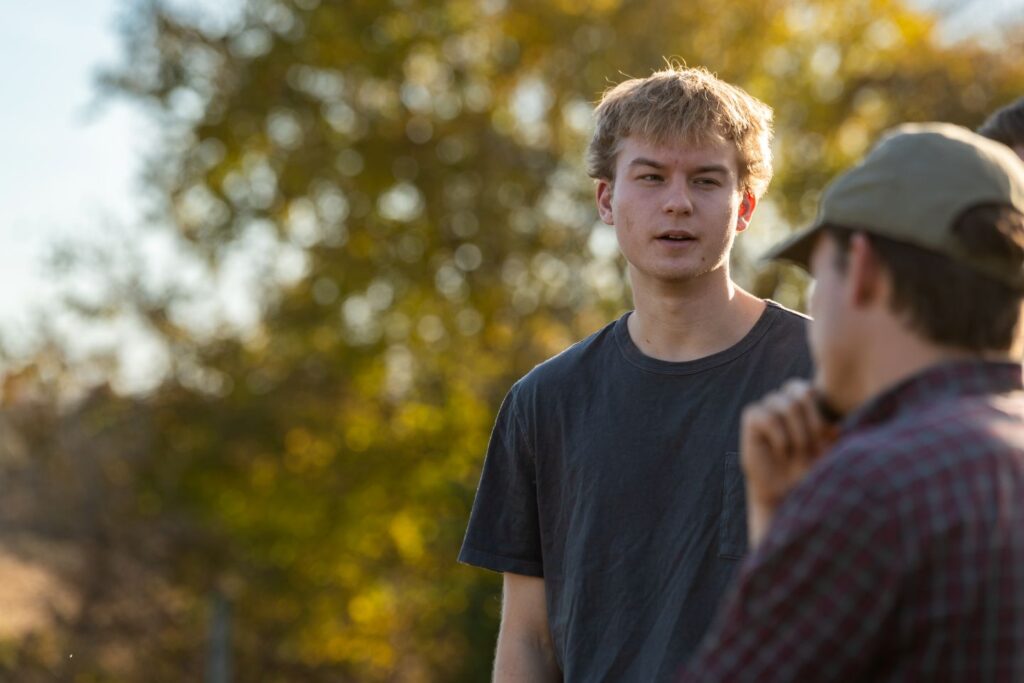
Fletcher Crean ’27 says the FARMSENSE project has brought team members closer together and validated his decision to attend Lafayette College. | Photo by JaQuan Alston
Working on FARMSENSE has validated his decision to choose Lafayette, with access to resources and an experienced professor who’s been a hands-on member of the team. “At a bigger school, there’d be a lot more hoops to jump through,” Crean adds.
Xiaomeng Shi, visiting assistant professor of electrical and computer engineering, says it has been rewarding for him to advise the FARMSENSE team, “watching our electrical and computer engineering students transform theory they learned into an intelligent, functioning system.”
Xiaomeng Shi, visiting assistant professor of electrical and computer engineering, has been impressed at how hist students have transformed theory into an intelligent, functioning system. | Photo by JaQuan Alston
Shi says the project has presented a sophisticated automation challenge: designing an adaptable platform to manage both produce drying and active plant growth inside a single greenhouse.
“It is exciting to watch them integrate a comprehensive sensor array that tracks variables like soil moisture, air temperature, light intensity, and humidity, and couple it with intelligent automation to control shading, ventilation, and irrigation, all while ensuring robust remote access to the sensed data,” he observes.
Josh Parr, manager of food and farm, says he’s looking forward to the automation at LaFarm.
The ECE students are taking on two areas to improve efficiency: one addressing the irrigation systems in the greenhouse over winter, the other improving the drying and curing of allium crops.
“Our irrigation system we currently have is not frost hardy, so we have to shut it down and drain it every winter. And this means in order to water in those tunnels, I have to find another way to do it. So usually that’s hooking into the watering in the greenhouse here,” Parr explains.
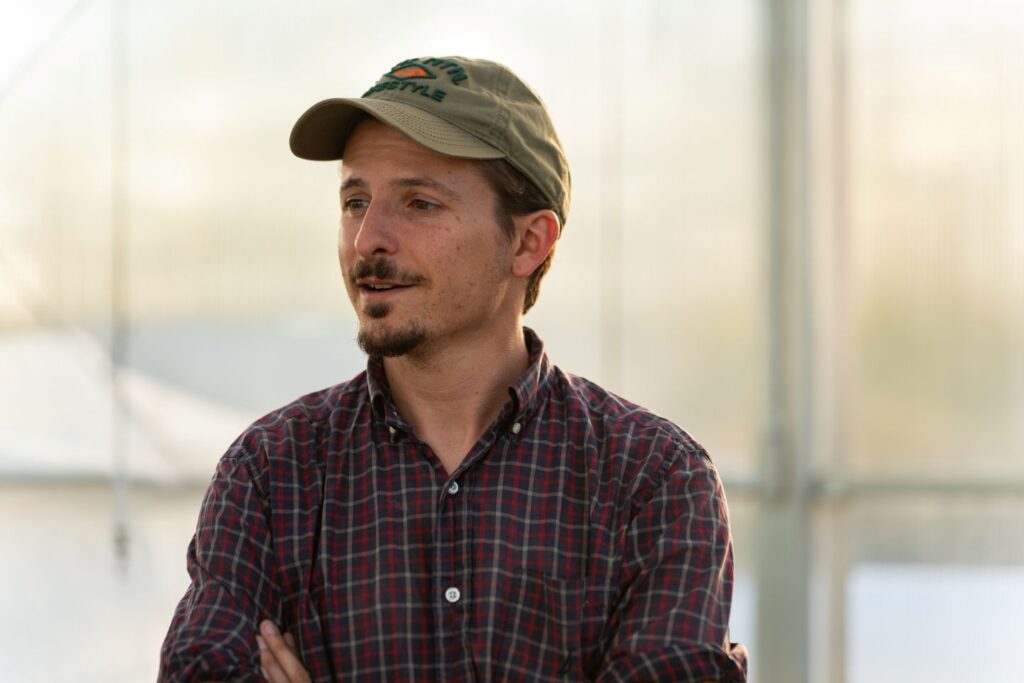
Josh Parr is looking forward to improved efficiency at LaFarm | Photo by JaQuan Alston
Instead of dragging hoses to water plants manually, he will have an automated frost-proof irrigation system through the FARMSENSE project.
“That would increase watering efficiency,” Parr says. “Plants like to get water more frequently in smaller doses rather than in one huge dump.”
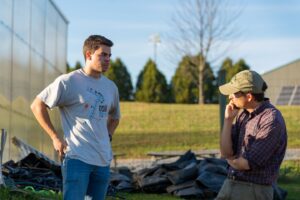
Sean McLoughlin ’27 (left) and Josh Parr, LaFarm’s manager, discuss irrigation systems. | Photo by JaQuan Alston
FARMSENSE also will improve the way Parr and his staff dry and cure onions, shallots, and garlic. Right now, the spaces are too humid, but students are proposing drying shelves with automated fans.
“It’s a huge bonus for us because if our onions are dried and cured in a better way, then they can last longer, which means we can distribute them longer throughout the year,” Parr says.
LaFarm values its relationship with the Engineering Division, whose students and faculty have come up with design solutions, including the current irrigation system and a wash station pavilion, to improve operations over the years.
“We’re really grateful for the students and their professors,” Parr says. “The students value it because, as an internal client, I have the capacity to meet with them frequently and give continual feedback on their project. It’s a deeper relationship with good symmetry and energy.”
Sean McLoughlin ’27 (electrical and computer engineering, German minor) has enjoyed Parr’s enthusiastic participation in FARMSENSE and how the collaboration is evolving naturally.
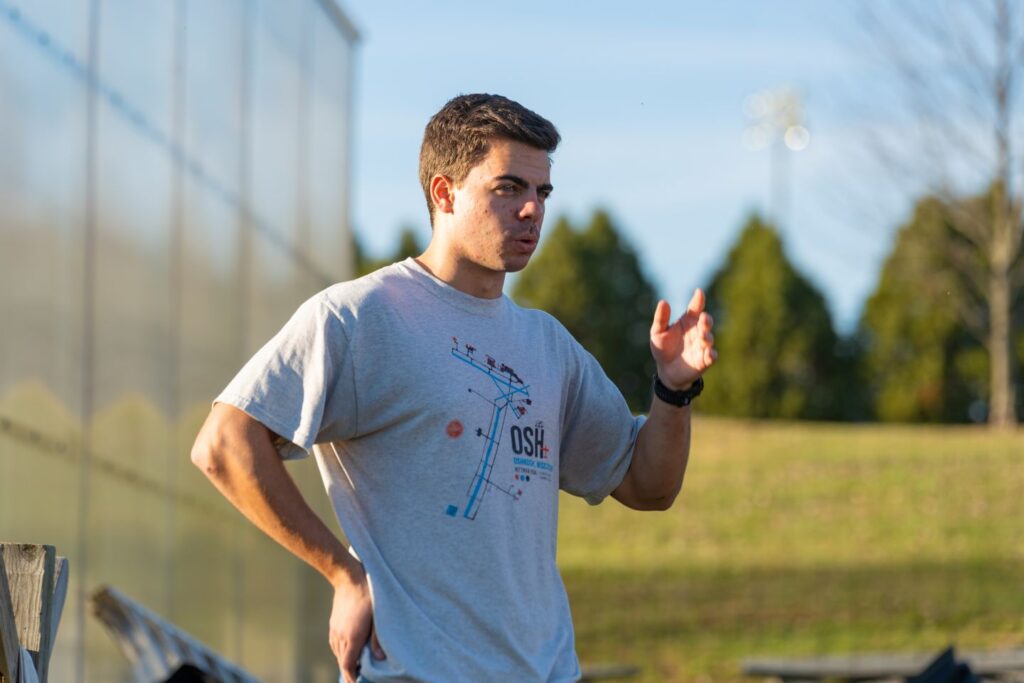
“Lafayette is all about letting us actually do our own thing and design things intentionally and on our own,” says Sean McLoughlin ’27. | Photo by JaQuan Alston
“Lafayette is all about letting us actually do our own thing and design things intentionally and on our own, which is great,” says McLoughlin, who, as a budding engineer, relishes the opportunities to seek creative solutions.
“It’s pretty difficult for them to get out here in the winter. Josh has to manually give it water every day or so,” he says, describing how running a solenoid valve would allow water to flow through little pipes and drip water on the greenhouse plants. “So, it’s a little bit more active control, a little bit less work required. We’re taking the load off of the volunteers and Josh. Josh decided for us that the smaller greenhouse was more ideal because the larger one has a little bit of automation already, and it was easier to install everything in the smaller greenhouse.”
FARMSENSE is offering ECE students a glimpse into the future of agriculture.
“There are so many interesting points,” Shi says. “We are focusing on automation to save on labor, but the students want to learn about what modern farming looks like. We want to involve some new technologies, remote sensing for example. Nowadays, in the modern smart agriculture area, people want to see the data, which can help with crop yields and overall efficiency. Coming to LaFarm allows us to think and imagine broadly about agriculture.”

Categorized in: Electrical and Computer Engineering, Engineering, Featured News, News and Features, Students