March 30, 2026
Inside the classroom: Where curiosity and engineering judgment meet
Inside the Classroom is a series offering a glimpse into classes at Lafayette, the talented professors who teach them, and how they impact and define a student’s experience.
By Bryan Hay
“How was your weekend,” Prof. Mike McGuire intones as his first-year aspiring engineers gather outside Acopian Engineering Center and prepare to take a close look at the trail system on campus and consider ways to expand it.
“Anyone go out for a hike on a trail?” he asks before instructing everyone to familiarize themselves with map and compass use and how to measure their paces, all valuable civil engineering skills to learn, even in an age of AI and robotics. McGuire emphasizes how these classic tools measure approximate distances quickly and allow engineers to engage more intimately with the physical world.
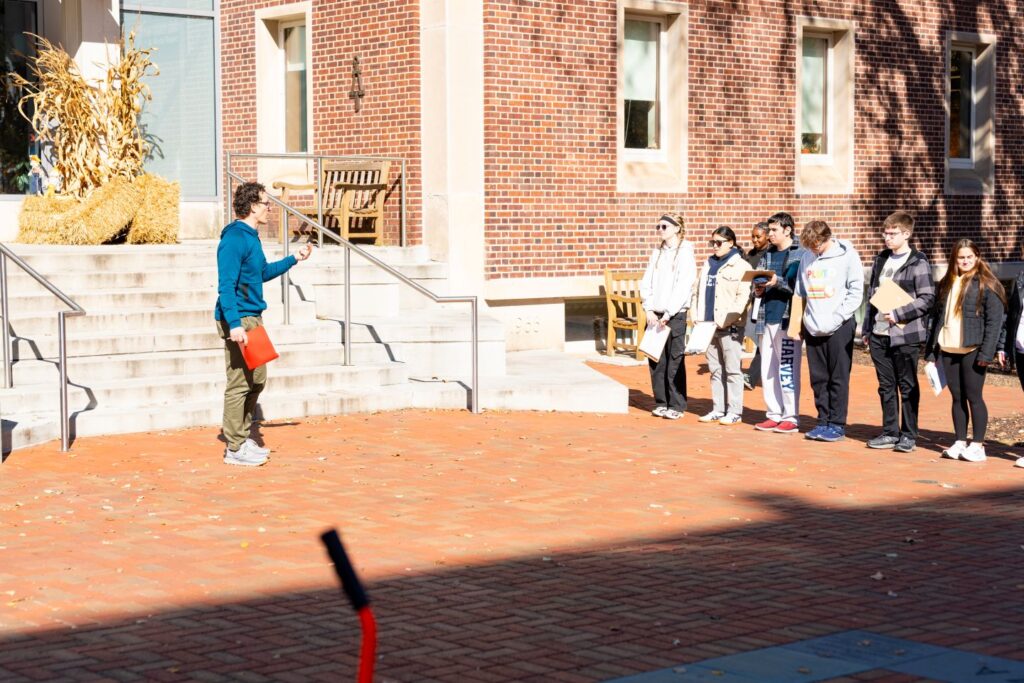
Prof. Mike McGuire leads students in learning how to measure their paces, a classic technique to determine approximate distances. | Photo by JaQuan Alston
From there, they headed across campus to the top of the escarpment trail where it ends behind Watson Hall. McGuire asked his students to continue their journey around the south rim of campus to imagine how the trail system could be extended, even through and around some large stationary obstacles.
Students listened to their enthusiastic professor explain how a width of between 8 and 10 feet is ideal for a multiuse trail and how the different surface materials such as gravel, concrete, and asphalt can be considered depending on the terrain, ease of installation, and cost factors. Along the way, students reached for clinometers to measure grades for accessibility, particularly looking for grades below 8% for compliance with the Americans With Disabilities Act.
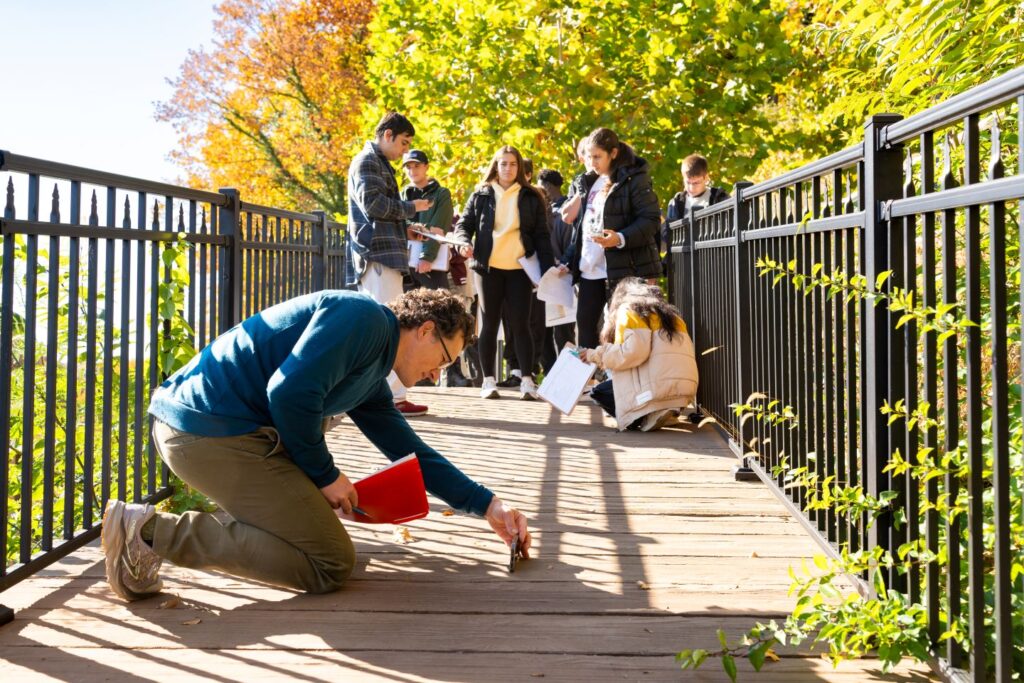
Students in Prof. Mike McGuire’s ES 101: Introduction to Engineering Design measure grade on escarpment trail. | Photo by JaQuan Alston
“What could be done here?” McGuire probes as the group encounters the steam line behind the tennis courts. Relocate the line, build an elevated platform, go around it?
“There’s no right answer,” he says.
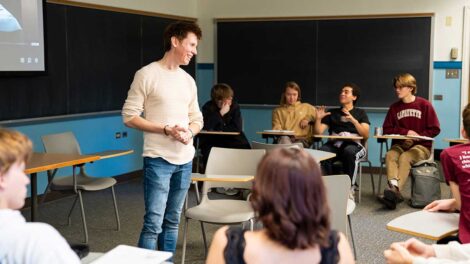
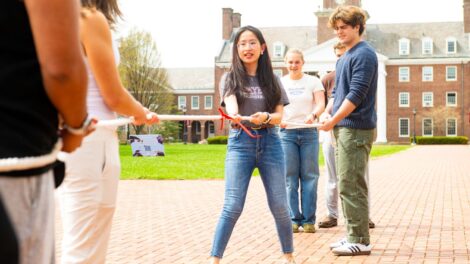
It’s hard to ignore the genuine passion for engineering and its power to improve lives shared by McGuire, professor of civil and environmental engineering and department head, all on full display in ES 101: Introduction to Engineering Design, a foundation course for first-year students interested in exploring engineering. In addition to designing trail systems, it also includes building sand castles on Anderson Courtyard.
“It’s here in this course where students go outdoors to consider the design of objects and sites around them, and assess their attributes and how they might be improved,” he says. “The experience inspires their curiosity. Interacting with the world provides opportunities to be curious and aware, and apply critical thinking skills and hone engineering judgment.”
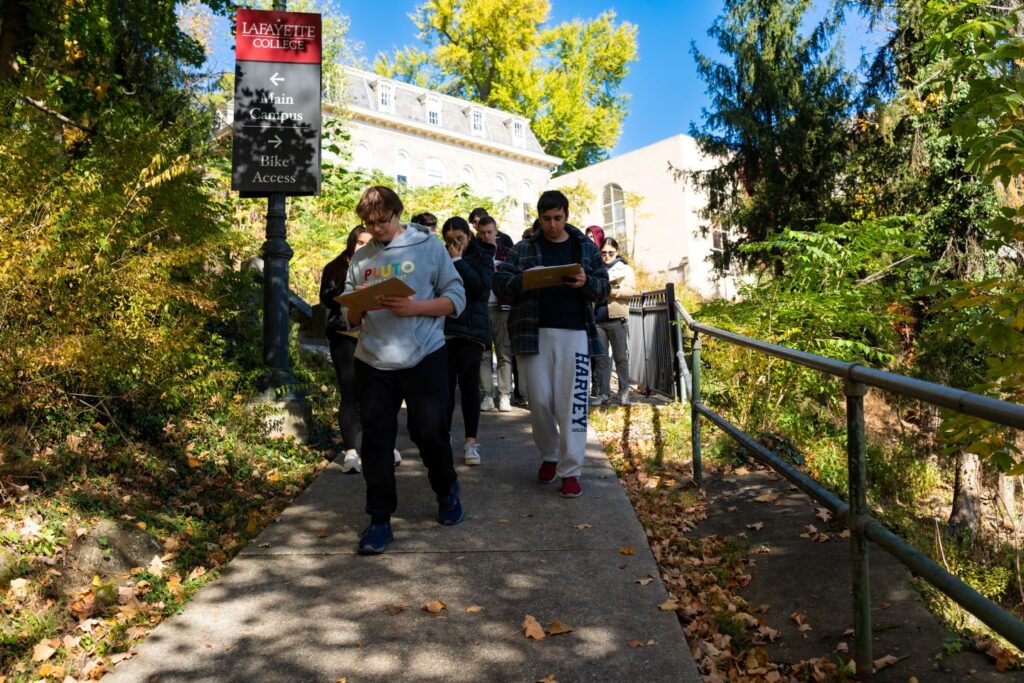
Students observe and take notes along escarpment trail. | Photo by JaQuan Alston
Paul Redfern ’29, who’s considering a career path that combines civil engineering and public policy, says ES 101 allows students to dive right into meaningful engineering experiences.
“Even if you’re not sure what discipline you’re going to go into, you get a little taste of everything,” he says. “And that was just so great for me, because I wasn’t really sure if civil or environmental was the right path for me. But now, you know, building the sand castles and going out in the woods to look at trails, I was like, this is 100% the path I want to take and where I want to go.”
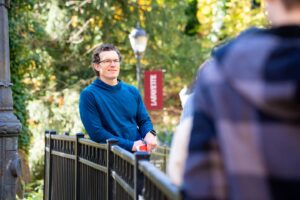
ES 101 inspires curiosity and critical thinking skills and hones engineering judgment, says Prof. Mike McGuire. | Photo by JaQuan Alston
Grace Weed ’29, who’s pursuing a degree in chemical engineering, has enjoyed the camaraderie of being with students considering other engineering fields.
“It’s really cool to see what people who I’m going to work with do and knowing there’s always other options to branch out with when considering a design,” she says.
“I’ve always liked making things, and I never knew that engineering was really an option,” she adds. “But coming to Lafayette and being able to take classes like intro to engineering and learning about trail design and how that can be applied to chemical engineering has brought focus to my journey here.”
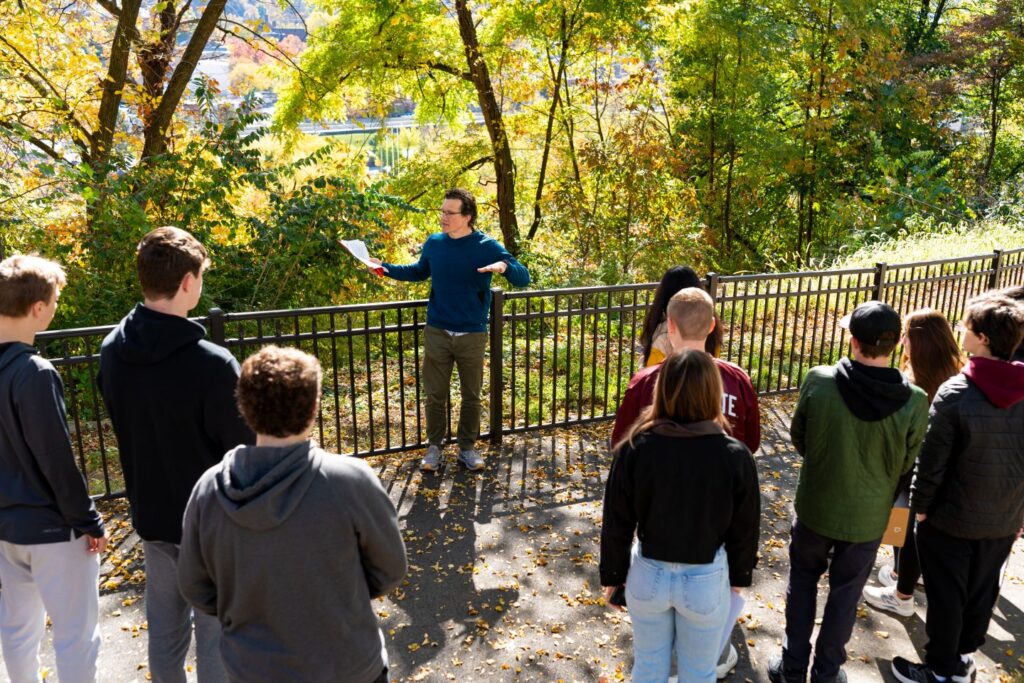
Students in ES 101 learn about the design decisions required to construct a multiuse trail. | Photo by JaQuan Alston
Ben Zilberstein ’29 observes how ES 101 has revealed to him the open boundaries of engineering.
“ES 101 definitely expanded my horizons and has taught me design skills that have relevance in electric and computer engineering, which I’m considering for my major,” he says “I enjoy designing with other people and all the creativity of it. It’s shown me there is always more than one way to approach an engineering challenge.”