June 3, 2026
Inside the classroom: From jingles to the bandoneon, music is all around
Inside the Classroom is a series offering a glimpse into classes at Lafayette, the talented professors who teach them, and how they impact and define a student’s experience.
By Bryan Hay
Prof. Jorge Torres smiles as his MUS101: Music, Culture, Context students gather in panels to discuss an oft-cited academic paper about the use of popular music in advertising.
It’s a multilayered course he has taught and enjoyed for 20 years, and it shows.
“I’ve always loved lively discussions with students,” says Torres, associate professor of music. “They’re Lafayette students, after all, always thoughtfully engaged and asking good questions. I like to tell them this course is about finding opportunities to think of music in different ways than they may be used to.”
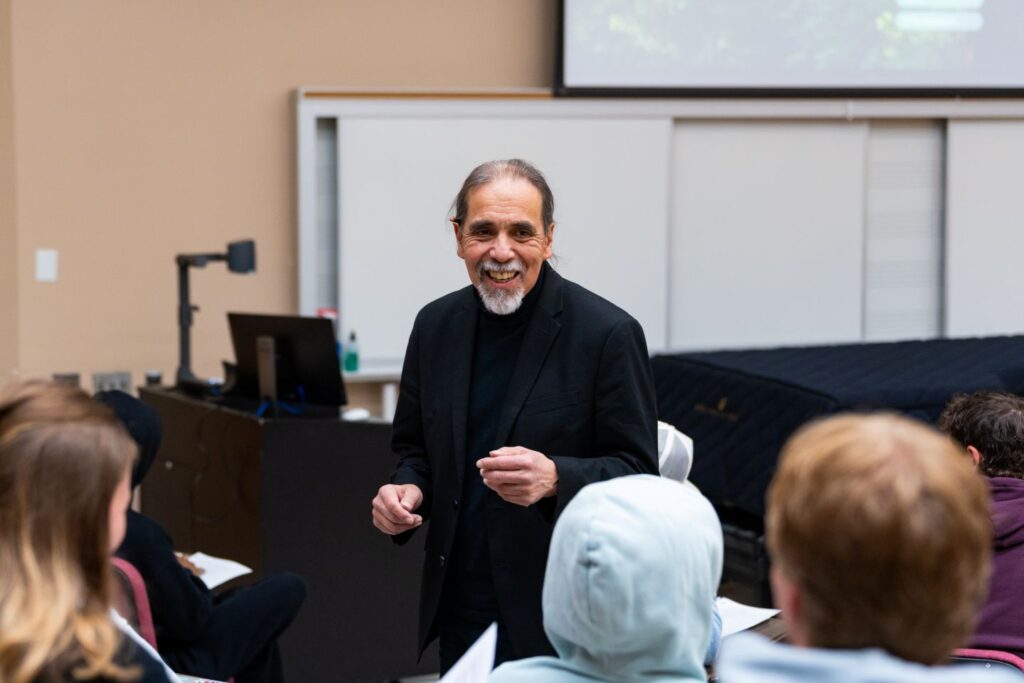
Jorge Torres, associate professor of music, has taught MUS101: Music, Culture, Context for 20 years, always enjoying lively interactions with his students. | Photo by JaQuan Alston
Following the main argument that all music is advertising, presented in a paper by David Huron, emeritus academy professor at Ohio State’s School of Music, students traced the evolution of how the emotional appeal of music grabs the attention of consumers and influences their behaviors over time.
They compared Gap’s 2026 “Sweats Like This” campaign, featuring rapper Young Miko, to the less complex but otherwise effective sizzle in the middle jingle used by McDonald’s when it introduced its Sausage McMuffin in 1984.
Commercials, like those aired during the Super Bowl, often seem more oriented around entertainment than the actual product they’re trying to promote. Once music in a commercial starts looping in your head, the permanent association with goods or services is complete, and, almost on cue, we reach for credit and debit cards or a mobile payment app.
“Consumerism and history have certainly changed,” Torres says, asking students what other music is instantly associated with a company or product.
“The KYW Newsradio jingle,” one student responds enthusiastically and starts to instinctively sing it. The class erupts in laughter.
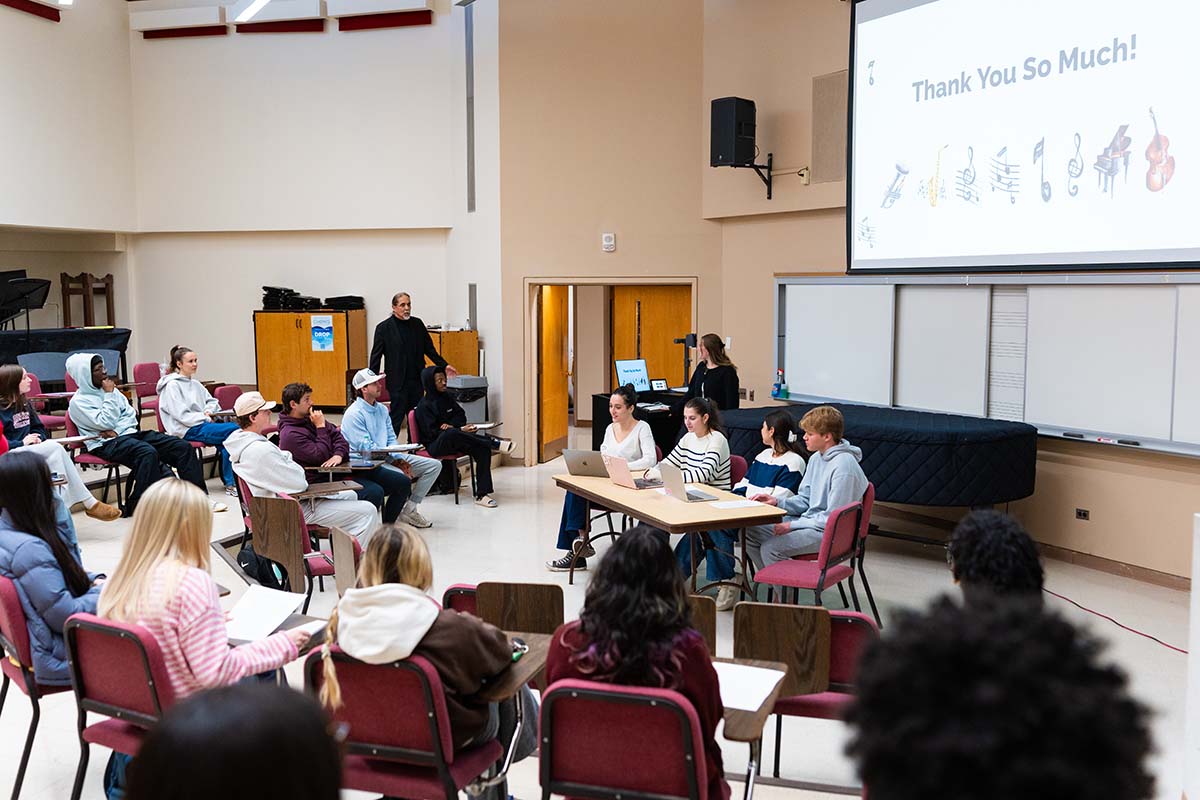
Students in MUS101 engage with the history and sociological aspect of music. | Photo by JaQuan Alston
The five-unit course covers music in the age of European imperialism; music in the balance of power; the meanings of performing and listening; music, identity, and commodification; and musicking in the digital age. It’s a required course for music majors, but it’s also popular with students pursuing other degree programs.
Among other things, students come away with a deeper appreciation of the complexity of musical confluences and interactions among diverse cultural groups and apply musical information to new musical settings outside of Western traditions.
Torres expects and encourages students to attend specific concerts at Williams Center for the Arts, as well as complete select readings and corresponding coursework.
This past semester’s topics ranged from pianos and politics in China to how the accordion was assimilated into Argentinean culture, all designed to expand an understanding of how music shapes the human condition, Torres says.
Violinist Audrey Kurtz ’28 (English and music) says the course provides a nice contrast to her music theory courses and complements the overall study of music.
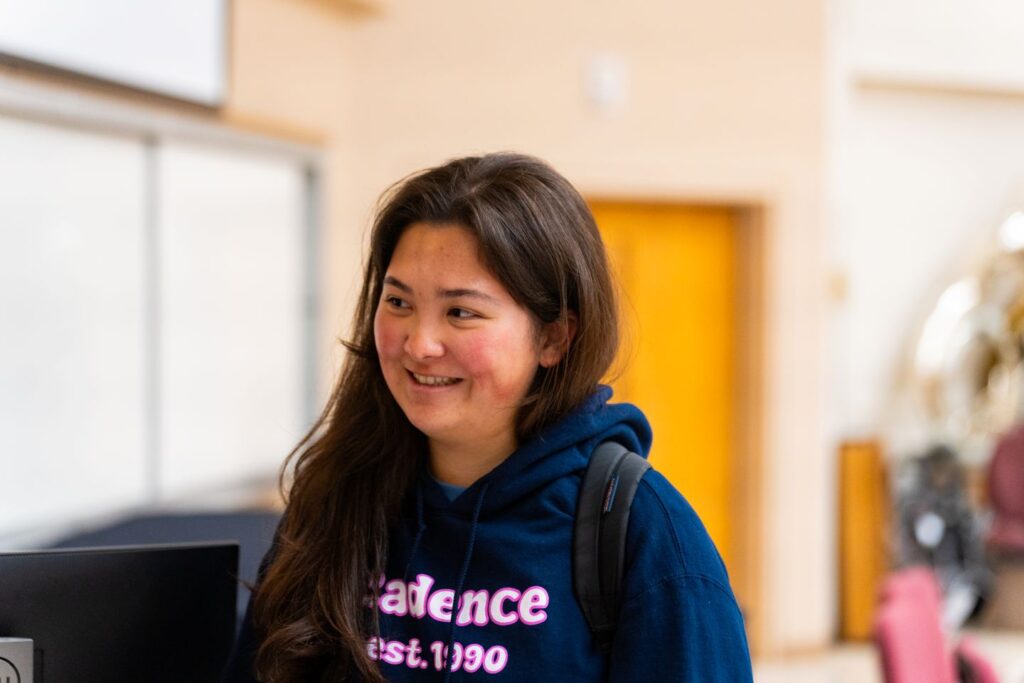
Audrey Kurtz ’28 says the course complements the overall study of music. | Photo by JaQuan Alston
“This course offers a more sociological perspective on music, a really nice way to get different sides of the same subject,” she observes. “I’ve always been focused on performing and on the music itself but never the background of it. Just looking at the history of music, and how it has evolved, has been very revealing.”
“It really opens a new perspective to me on something I know so well, and makes me take a different look at things that I’ve never really thought of before,” she adds.
Patrick Theiss ’26 (economics), who played trombone in middle school, says Torres’ course reconnected him to his love of music and complemented his economic studies by analyzing articles and learning about music in advertising.
“It’s just good to branch out, and Lafayette’s liberal arts experience encourages exploration of many topics and subject areas,” he adds.
Camryn Fitch ’28 (economics) says she was encouraged to take the course by her women’s soccer teammates, and it has opened her perspective of how music permeates everything around us.

In MUS101, Camryn Fitch ’28 says she has discovered a deeper appreciation of how music surrounds every part of our lives. | Photo by JaQuan Alston
“Music is in our everyday life. And I just think it’s really cool to connect history to our music today,” she says. “And like you saw in the presentations, it’s very inclusive in commercials and advertisements. It’s just cool to learn more about music’s role in our lives.”
Her experience in Music 101 validated her decision to come to Lafayette College.
“It’s really unique to be an economics major and take a class like this,” says Fitch, who thanked Torres for his inviting classroom and exposing students to unique music, musicians, and performances, including a Hawaiian dancer. “This course is just one example of how Lafayette makes you do things out of your comfort range and offers such a variety of experiences to expand your horizons.”


Tagged with: Inside the classroom