Bicentennial Celebrations
- For more information on Bicentennial events, visit lafayette.edu/bicentennial.
By Amy Downey
Video by Olivia Giralico
The College’s 200th anniversary was acknowledged in a special way this spring, when groups of faculty, staff, alumni, and students traveled to Paris to celebrate the Marquis de Lafayette and represent the College named for him.
Closely tied to the opening of an exhibition about the Marquis de Lafayette at the National Archives of France, a collection for which the College loaned more than 50 artifacts, the group spent a couple of days in the Marquis’ native country in early April, visiting the museum collection, participating in thoughtful dialogue about globalization, connecting with Franco-American history, and considering the values of the Marquis.
Here are some of the most memorable stops and moments from 48 hours in Paris.
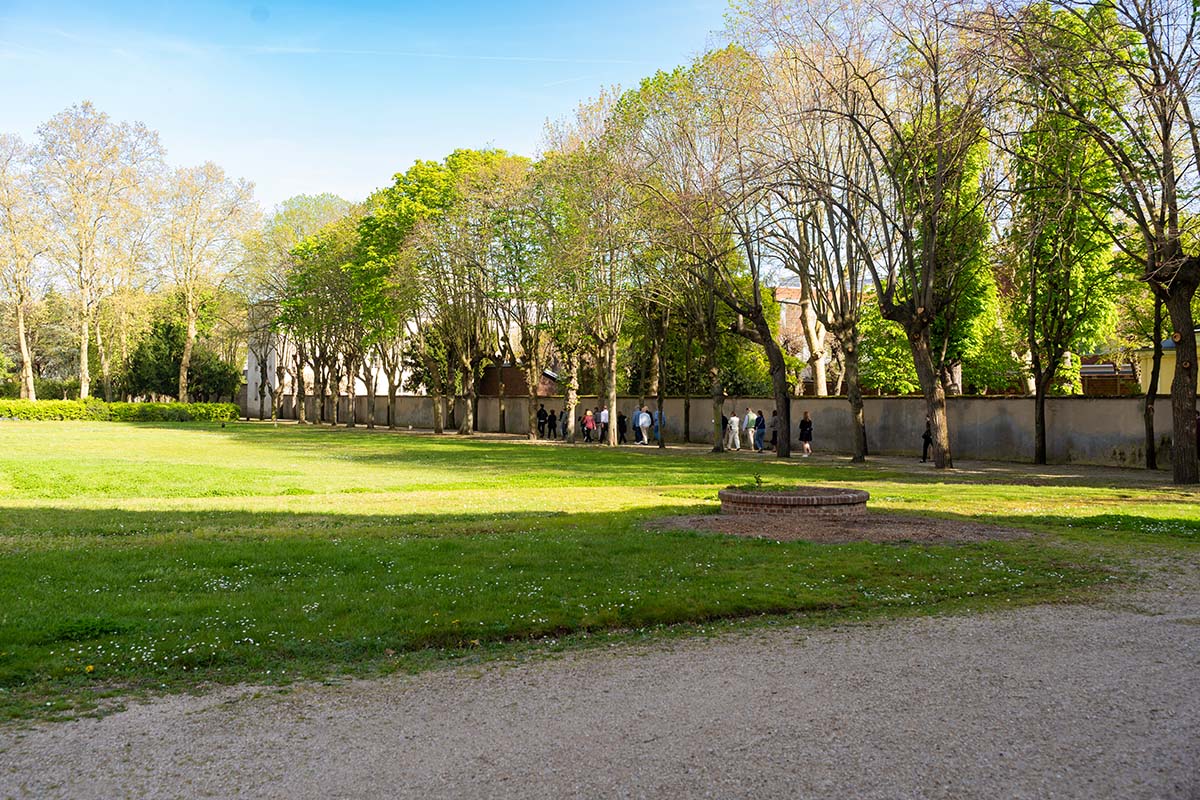
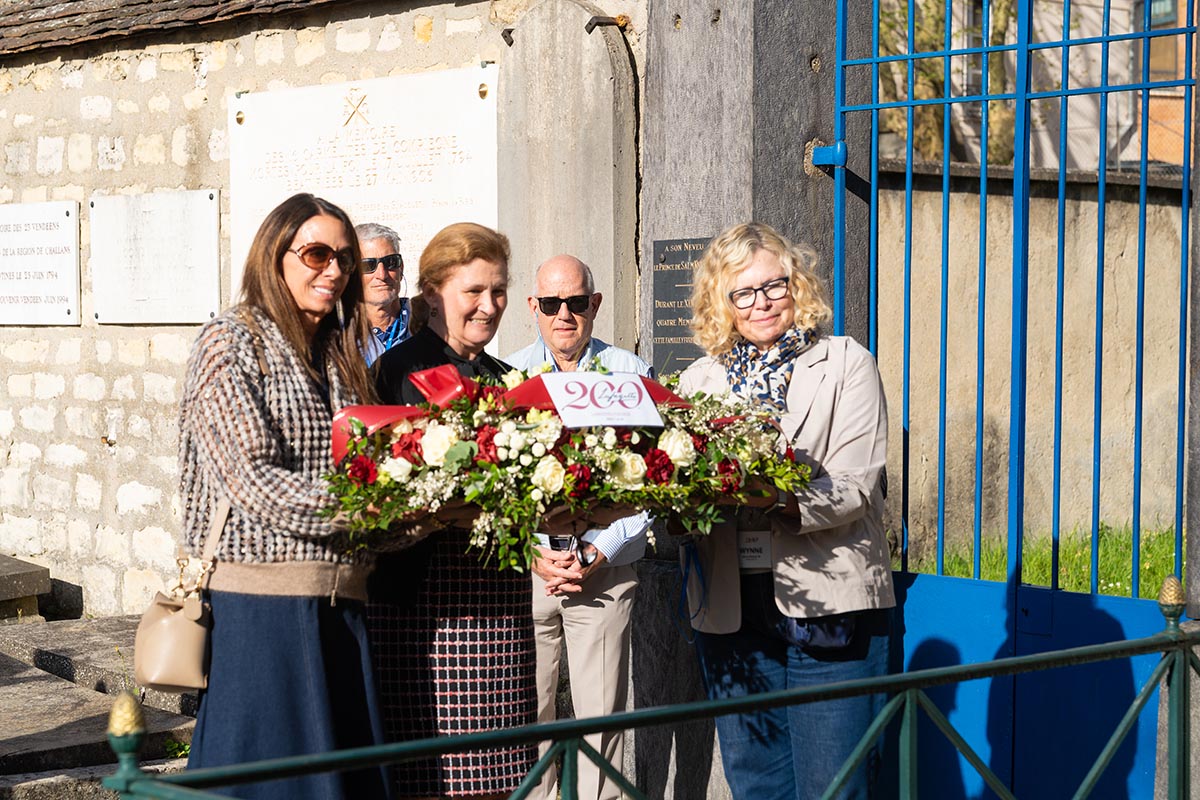
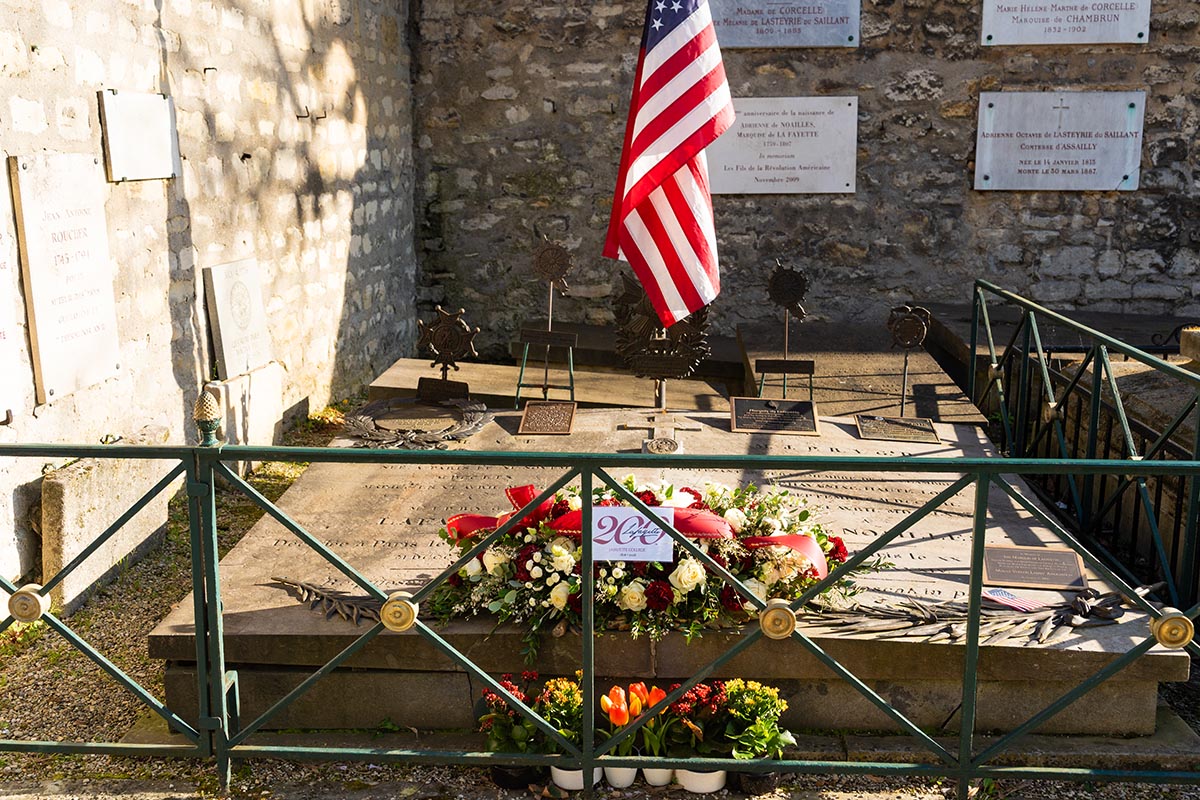
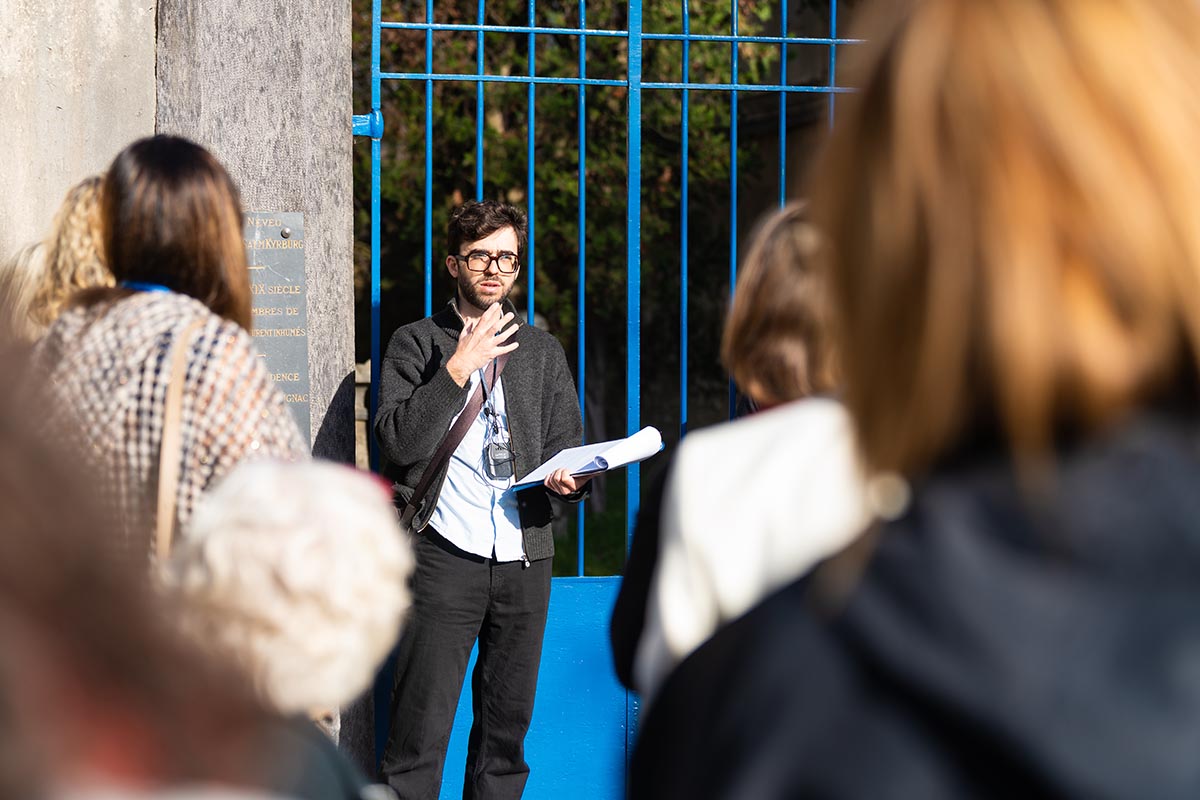
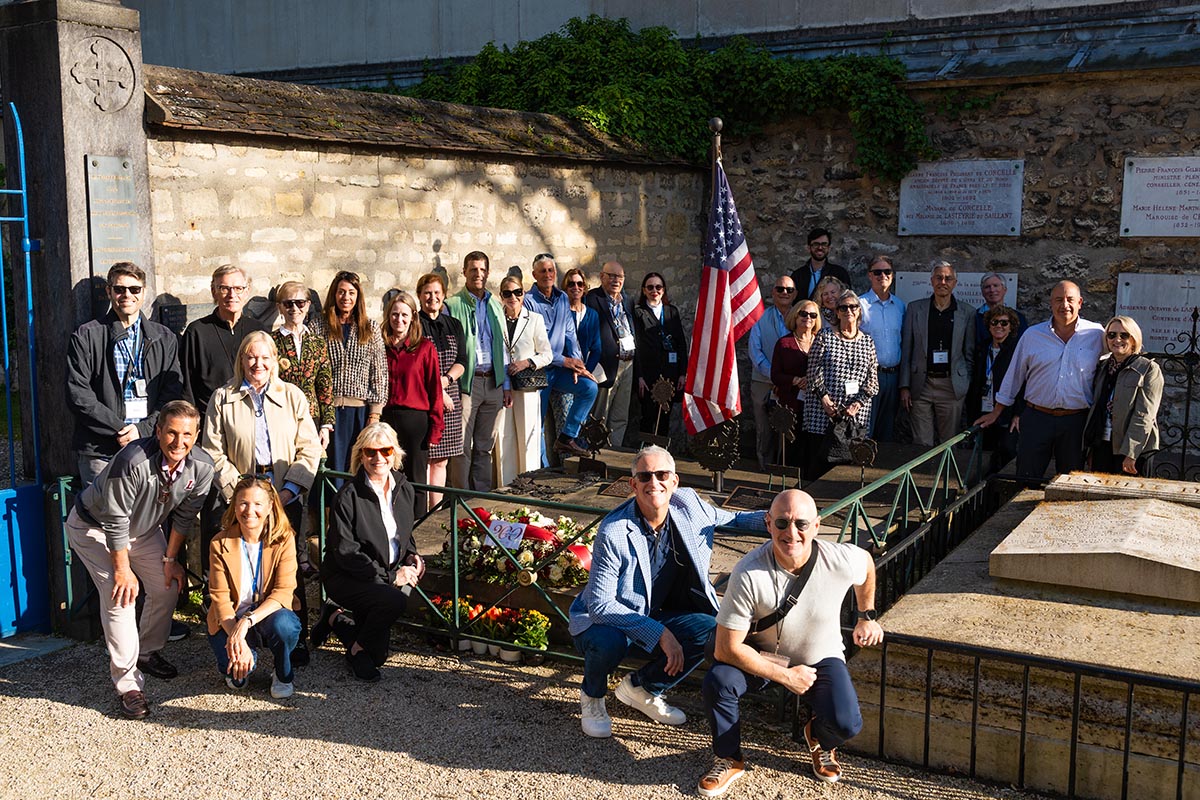
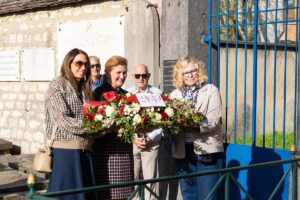
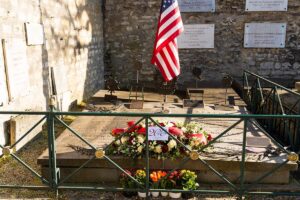
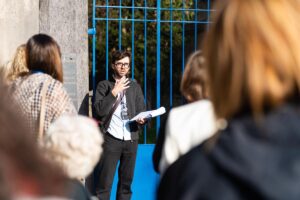
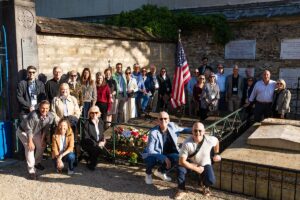
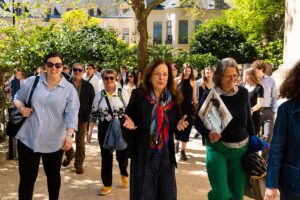
On behalf of Lafayette College, President Nicole Hurd and Bicentennial Committee co-chairs Wynne Whitman ’86 and Fran Della Badia ’91 presented a spray of maroon and white flowers to the resting place of the Marquis de Lafayette at Picpus Cemetery on April 6. The private cemetery is tucked away in the 12th arrondissement; the gravesite of Lafayette and his wife, Adrienne, can be found by walking down a tree-lined path to the back corner of the property. Lafayette’s grave, adorned with an American flag and containing soil from Bunker Hill, is positioned next to the mass graves of more than 1,300 victims of the Reign of Terror—some of them being the family’s relatives. “Everyone buried here [in Picpus Cemetery] has an ancestor in the mass grave,” the gatekeeper told the group, noting that the “Hero of Two Worlds” was laid to rest quietly, without an elaborate ceremony, when he died in 1834.
After learning about and touring the site, Hurd recited a quote that the Marquis wrote in a letter to Adrienne while onboard Victory en route to the United States in 1777: “I hope that, for my sake, you will become a good American, for that feeling is worthy of every noble heart. The happiness of America is intimately connected with the happiness of all mankind.” As a church bell rang in the distance, Hurd later pledged: “Lafayette, we will be leaders, and we will create leaders.”
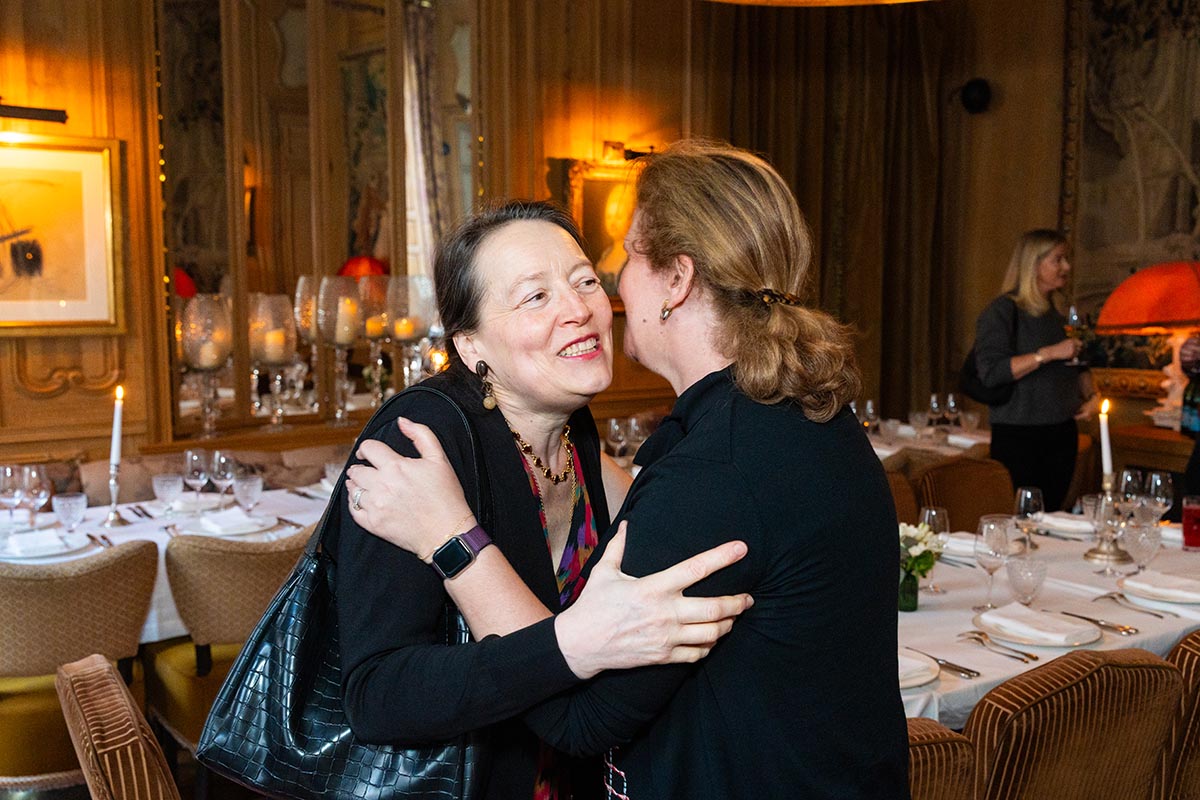
Virginie de Pusy Lafayette reconnects with College acquaintances including President Nicole Hurd (pictured on right) at the restaurant Lafayette’s, located in her ancestor’s former townhouse. | Photo by JaQuan Alston
Afterward, Virginie de Pusy Lafayette, a seventh-generation direct descendant of the Marquis, met the group for dinner and conversation at Lafayette’s Paris. (This wasn’t the first time Virginie has met members of the College community: Last spring, she sat down with President Hurd and was on campus for the showing of The Lafayette Musical & Immersive Bicentennial Tour; she also recently attended the March 31 exhibition dedication at the National Archives of France.) The restaurant is located in a former 1728 townhouse of the Marquis de Lafayette in the 8th arrondissement—a prominent neighborhood that’s home to the presidential residence—and has been restored to life with hanging tapestries, a candlelit ambiance, wood-paneled salons, and a “three worlds” menu inspired by French, American, and African cuisine.
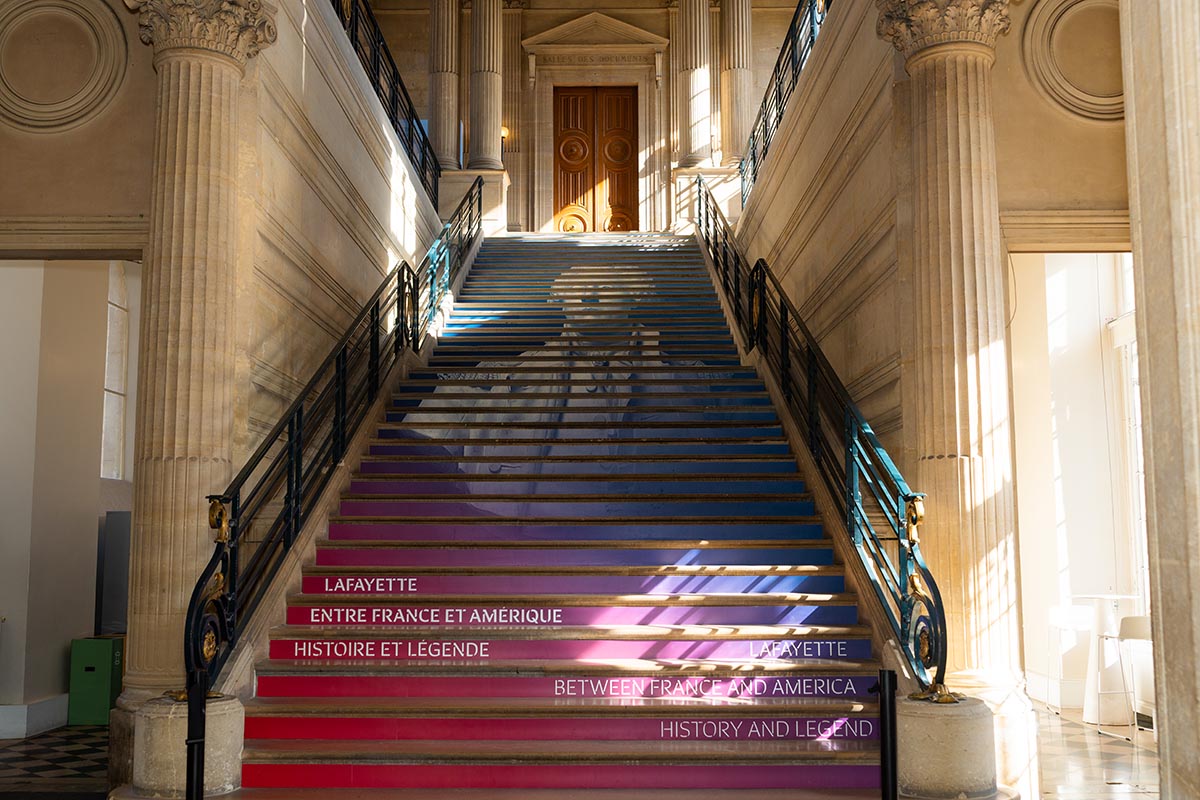
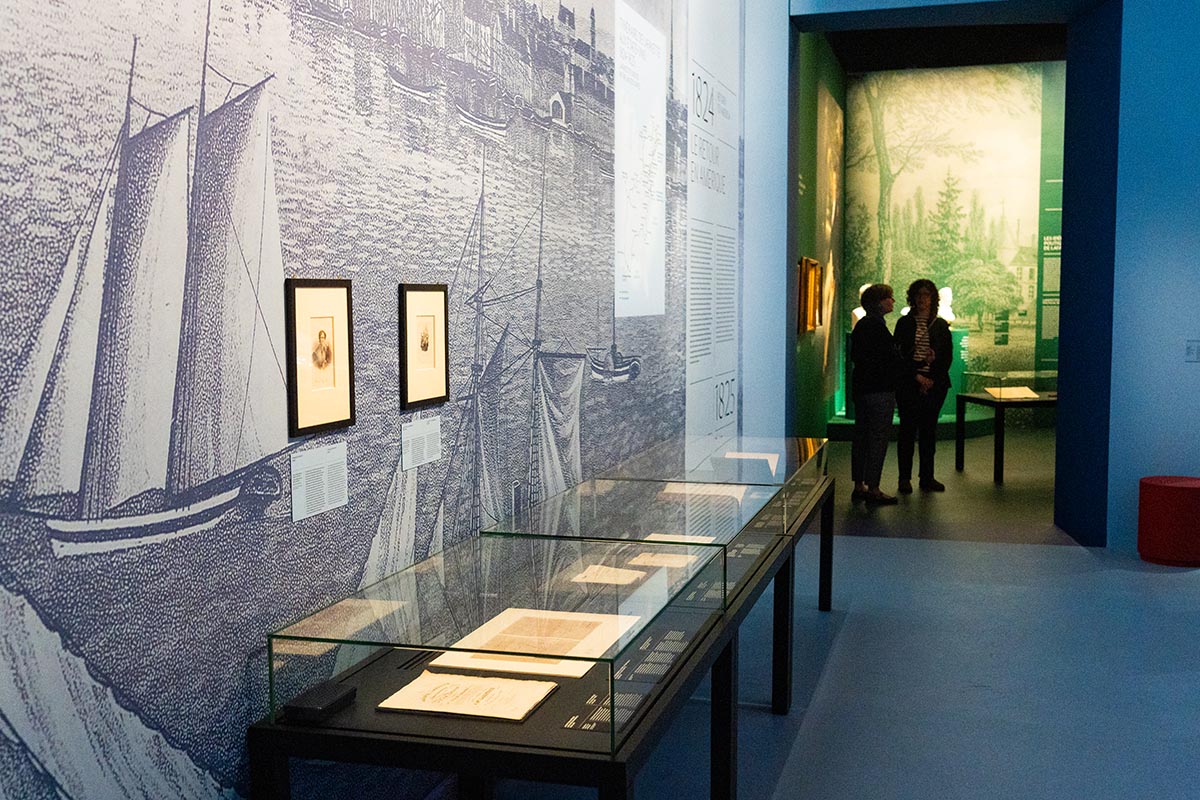
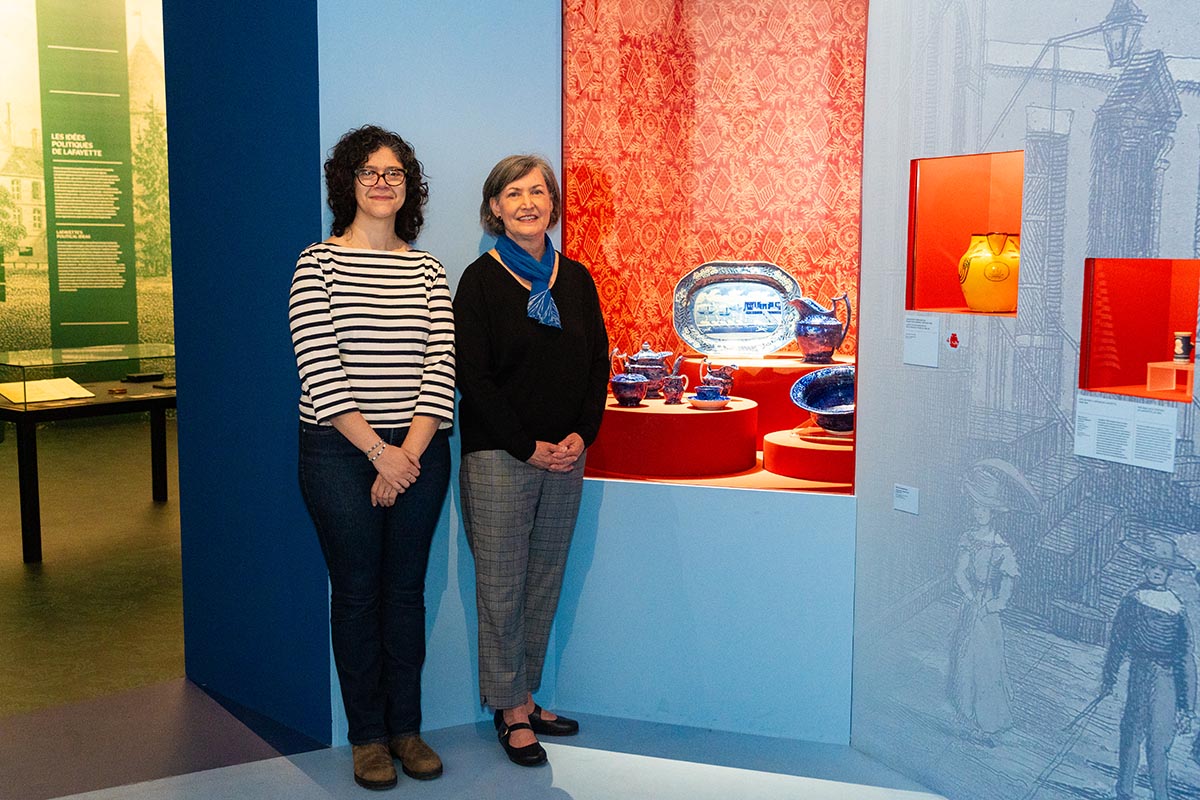
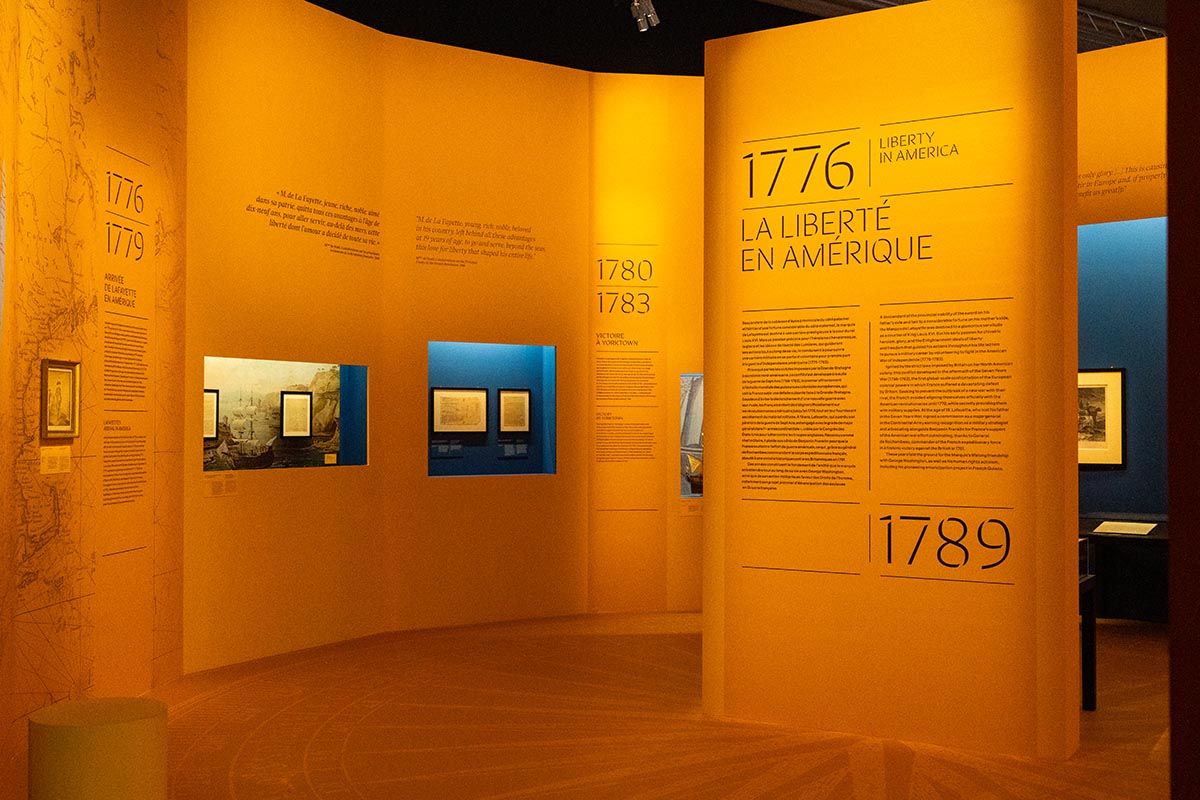
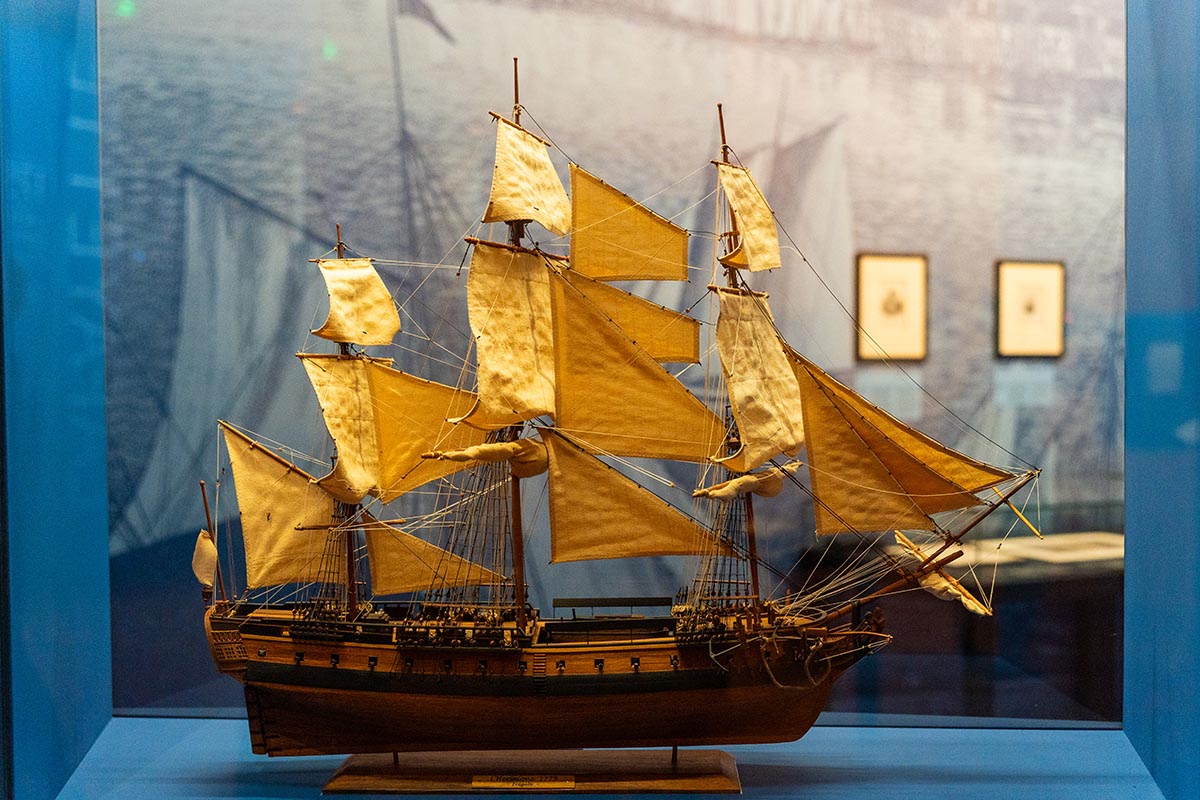
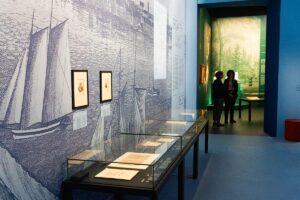
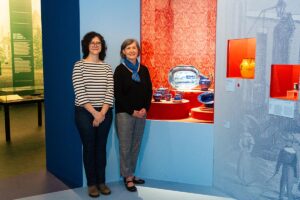
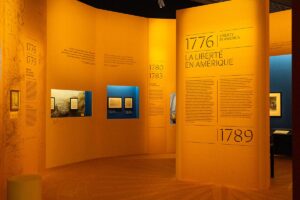
On the morning of April 7, the National Archives of France was closed to the public—except for Ana Ramirez Luhrs and Elaine Stomber ’89, P’17,’21, co-directors of Special Collections and College Archives, who were there to walk through the exhibition, roaming the rooms in awe. This was the first time they saw Lafayette Between France and America: History and Legend and the College’s artifacts on display. With more than 50 pieces loaned, the College is one of the most significant contributors to the collection. “To bring these materials to France and reintroduce the Marquis de Lafayette, the man, to the country and to Paris, is really a wonderful opportunity for Lafayette College,” Stomber says. “The long-term relationship between France and America is so beautifully laid out in this exhibition. Everything that our two countries have shared during wartime and revolutions is available for everyone to see and appreciate.”
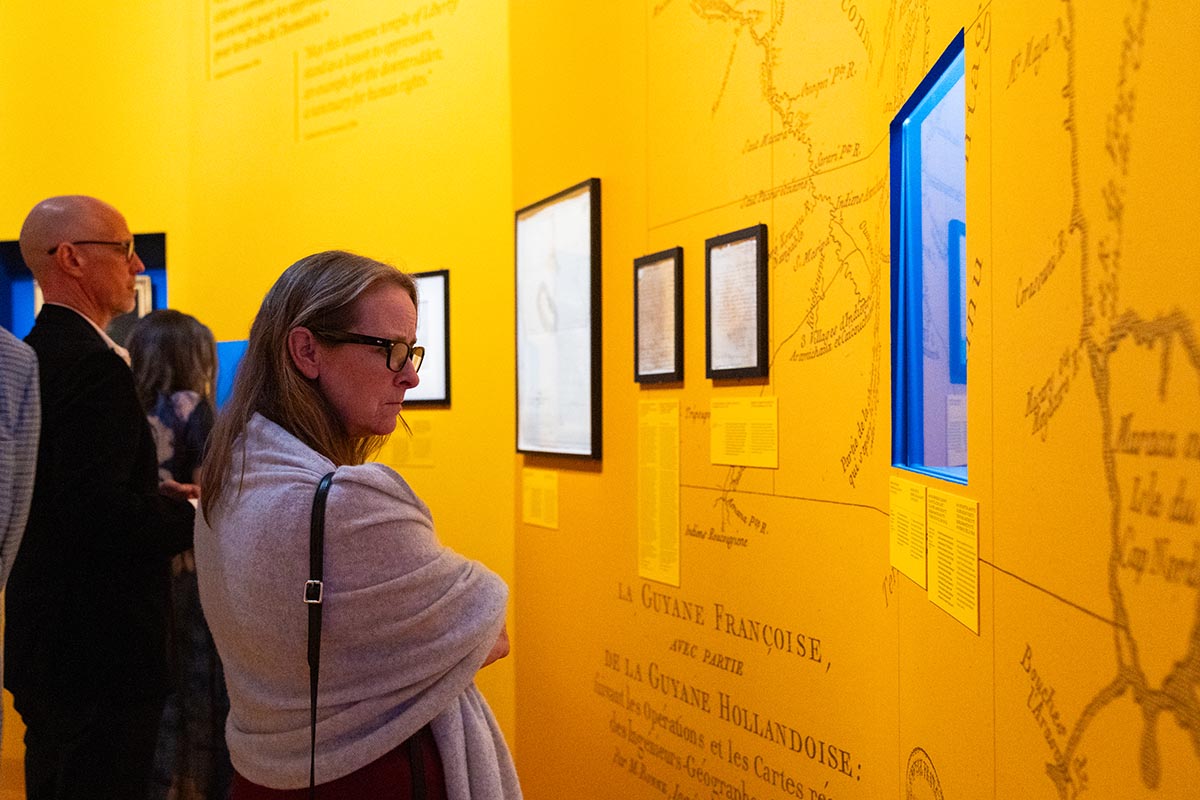
After three years of meticulous planning and collaboration between the two teams of curators, it took three weeks to “move in” and install the exhibition. For the scenography and floor plan, the objects representing chapters in Lafayette’s life were organized and displayed in five distinct colors and spaces. Upon entering the exhibition, for example, visitors are greeted with a warm “buff” yellow room that exudes freedom and liberty. The color is also drawn from military uniforms worn during the Revolutionary War—a shade Lafayette is often portrayed in. Elsewhere, red represents the French Revolution, while shades of blue show for his Farewell Tour fanfare. “The colors are so vibrant, and our pieces just jump out,” Ramirez Luhrs says.
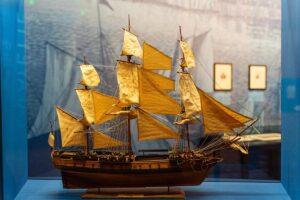
Vitrines and cases were designed to specifically show the College’s objects in new ways, like the dual-glass-paneled Hermione, visible from multiple rooms on the tour. “We’ve handled these materials so many times, but to now see them in a three-dimensional way, in this space, is just spectacular,” Stomber says. Just outside the doors of the exhibition is a bilingual panel dedicated to Lafayette College, a major lender, that details the timing of the Bicentennial and America’s Semiquincentennial. (Note: a catalog of the exhibition is now available for purchase at the College Store.)
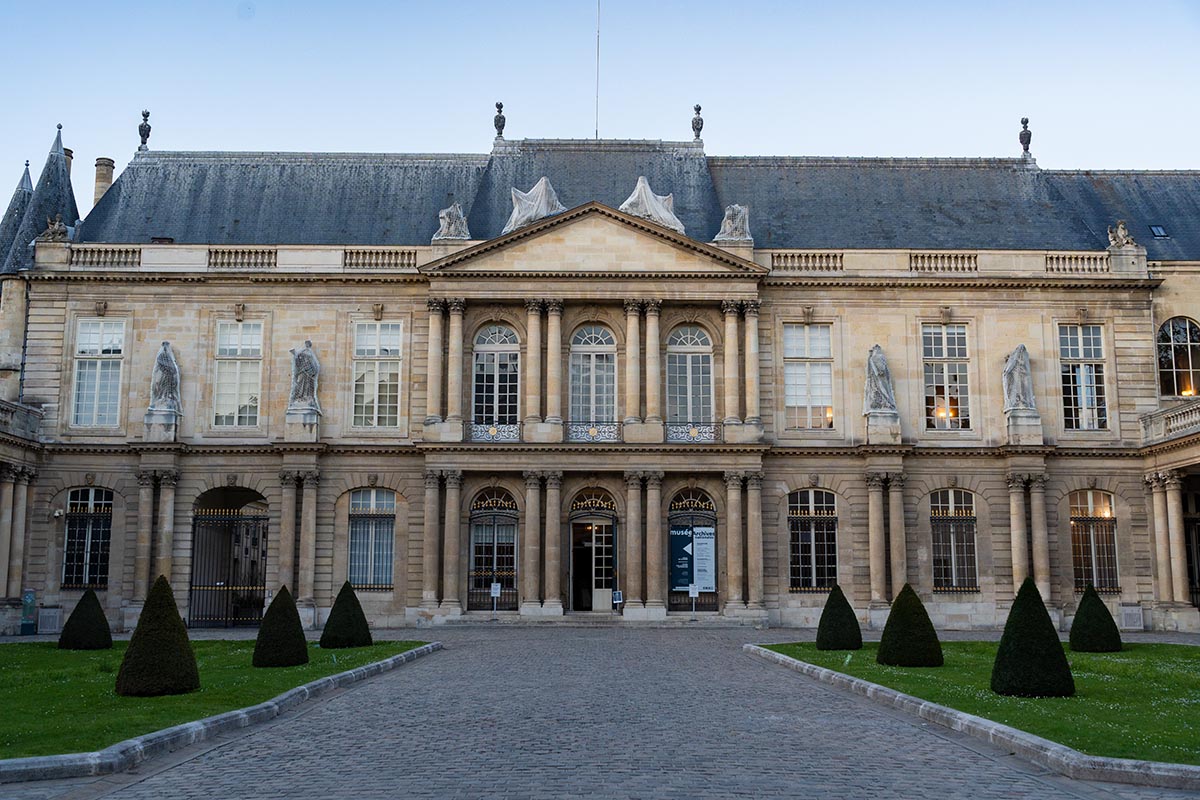
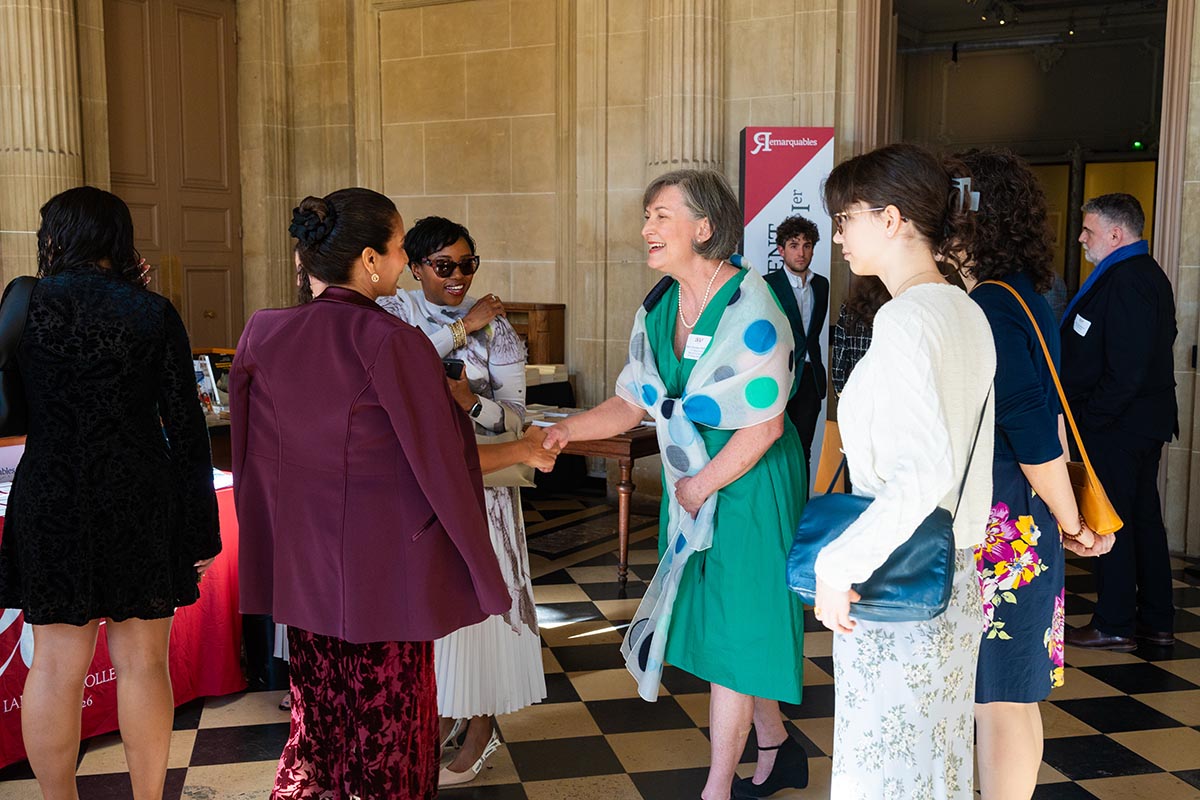
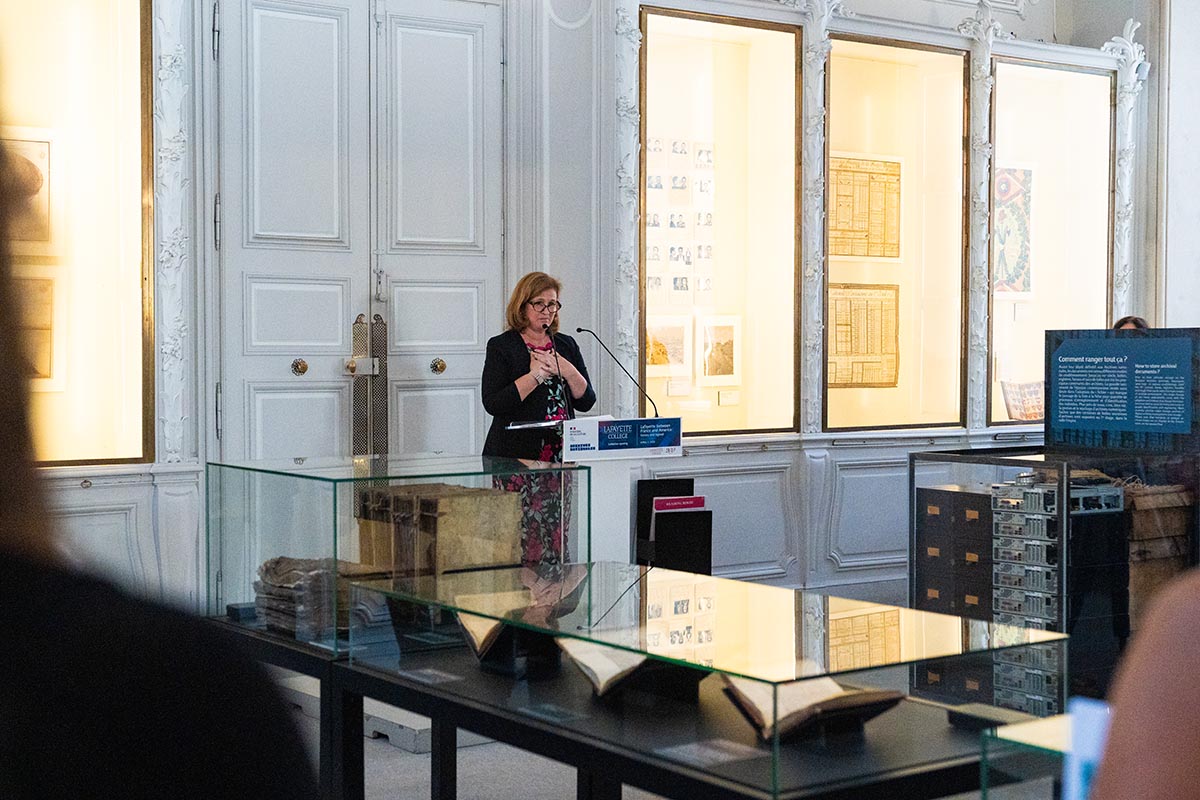
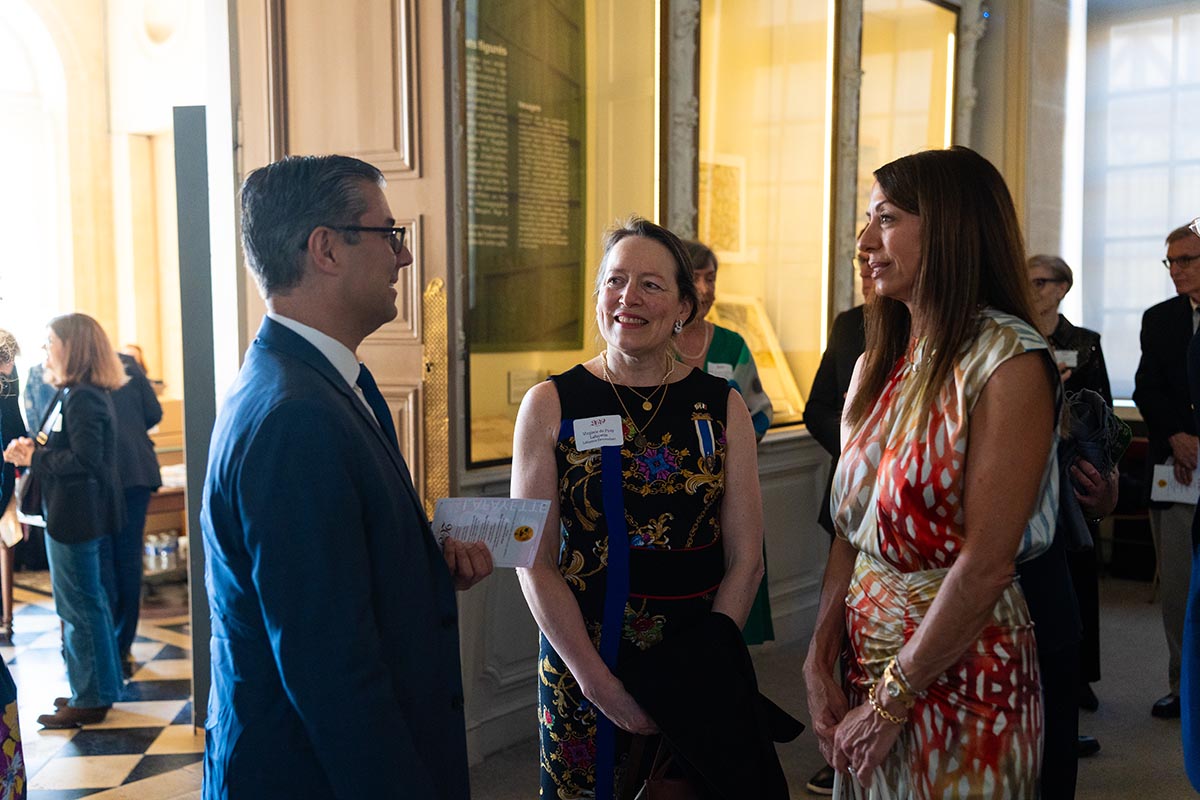
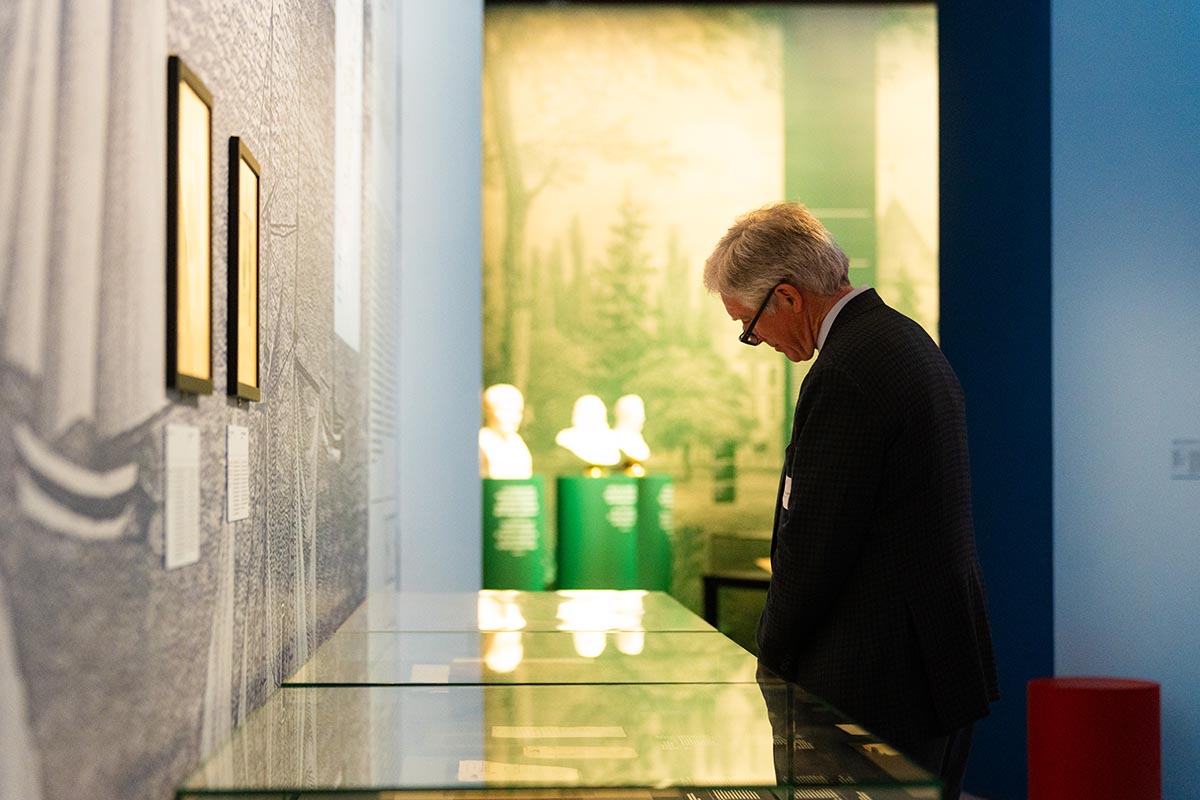
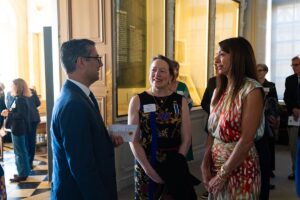
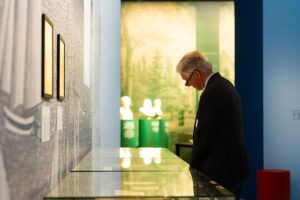
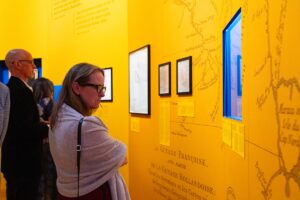
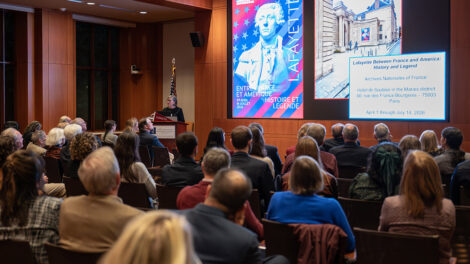
Later that Tuesday evening, alumni who lived and worked in France along with other invited guests joined a small reception and private showing of the exhibition. A welcome was delivered by Hurd, followed by remarks from Marie-Françoise Limon-Bonnet, director of the National Archives; Provost Laura McGrane; Olga Anna Duhl, Oliver Edwin Williams Professor of Languages; and Ramirez Luhrs. “This exhibition reminds us that cultural exchange constitutes a universal language capable of transcending all barriers,” said Duhl. “The experiences it conveys are intended to stimulate contemporary reflection on the relevance and vitality of the principles that guided Lafayette and upon which contemporary democracy is founded.”
As the Lafayette Bicentennial Fellow 2025-26, Duhl has been spending time in France representing the College. In addition to editorializing the bilingual panels and labels for the exhibition and helping with the installation, Duhl gave a speech to 300 guests, on behalf of the College, at the March 31 inauguration; guided an alumni group through the exhibition on April 7; and also participated in a two-day symposium, “Lafayette in the Mirror of Sources,” in late April. “It’s been a long journey, but everyone is excited and extremely pleased,” said Duhl, explaining that she originally pitched the idea to the National Archives of France back in 2023. “Some Lafayette enthusiasts were particularly surprised to see there’s such a difference in perception. It was a revelation—now we have a narrative that tries to bring together the different sides of him.”
College Archivist Emeritus Diane Shaw, who attended that evening, said in addition to beautifully showcasing original letters written by Lafayette—a collection that is now fully digitized and available online—another great strength of the College on view was the artwork of the prints, lithographs, and paintings. “We have some beautiful paintings of Lafayette, and there’s one painting from about the time he first decided to do something about freeing slaves, early in his career,” she says. “And he’s just wearing his uniform, but he looks so soulful, you know? It’s a painting that isn’t well known, but I’m so glad it’s here.”
Della Badia, who has been the president of the Alumni Association Board for the past two years, also toured the collection that evening. “The exhibition was a thoughtful and yearslong collaboration with the National Archives,” she says. “It highlighted for us, as a small liberal arts college, the meaningful and outsized impact that we can have on the world.”
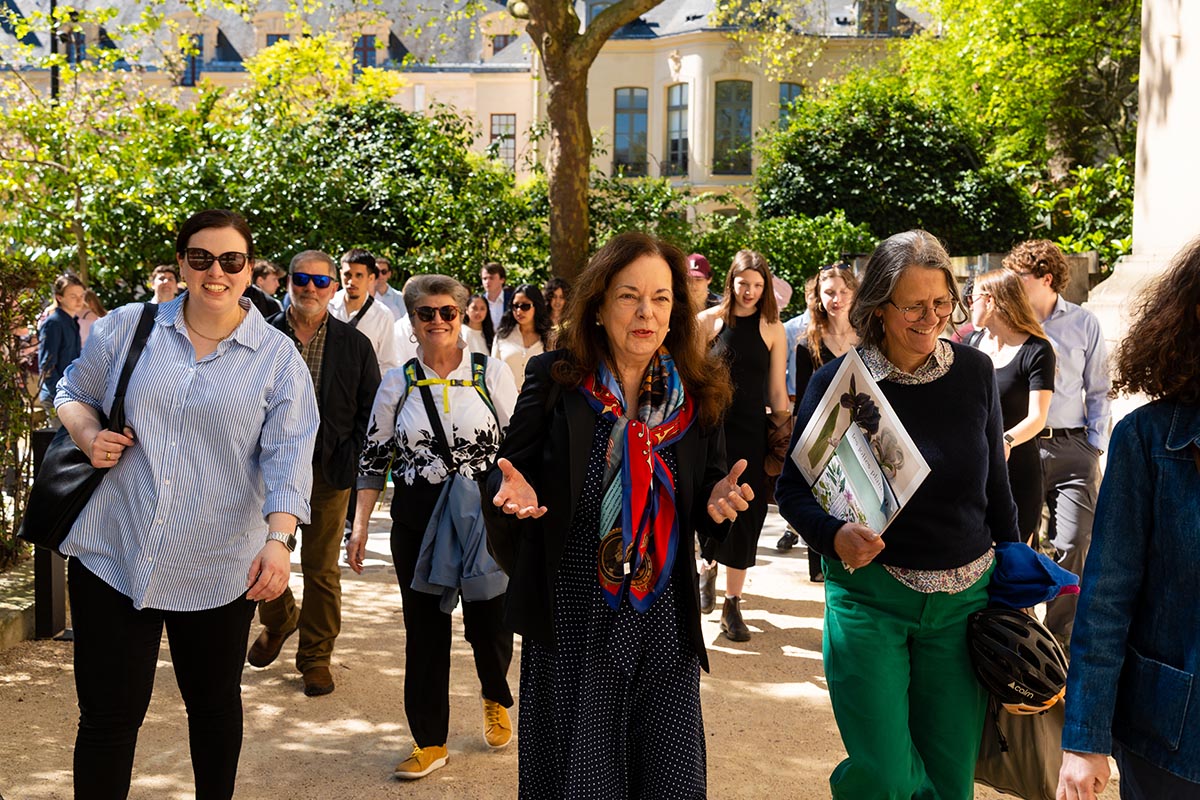
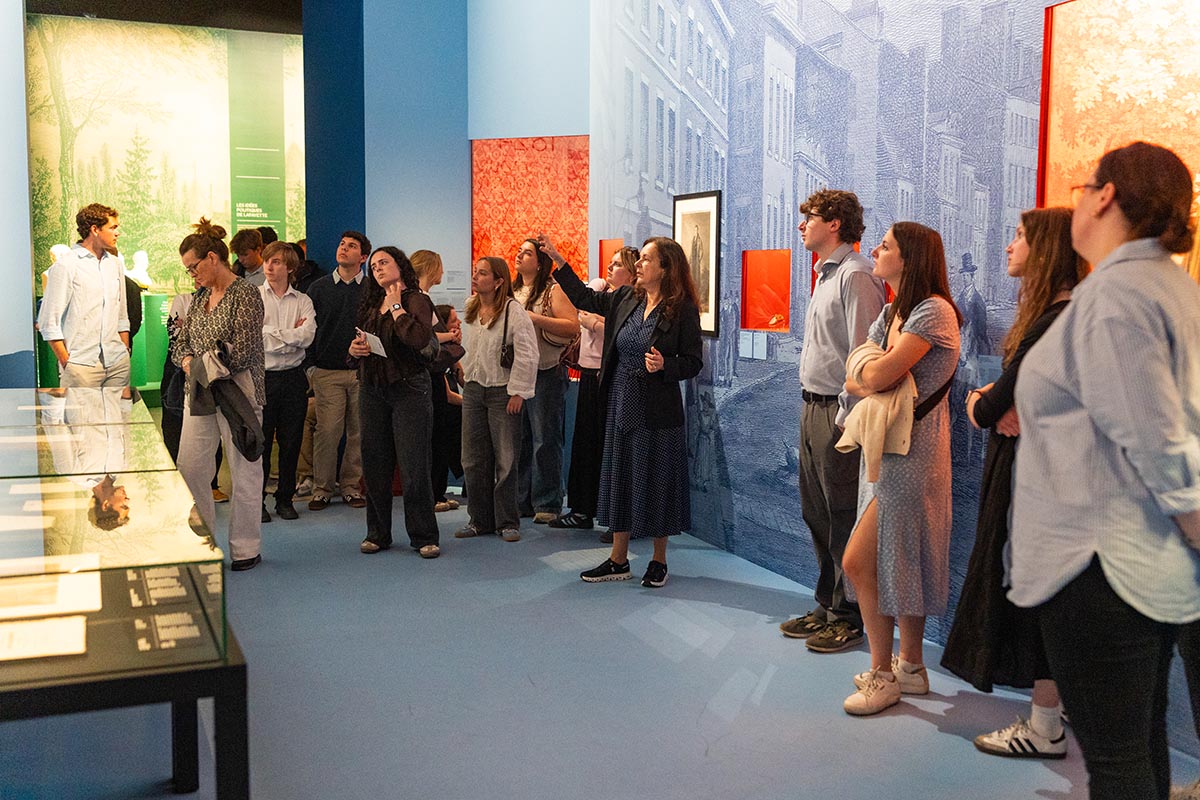
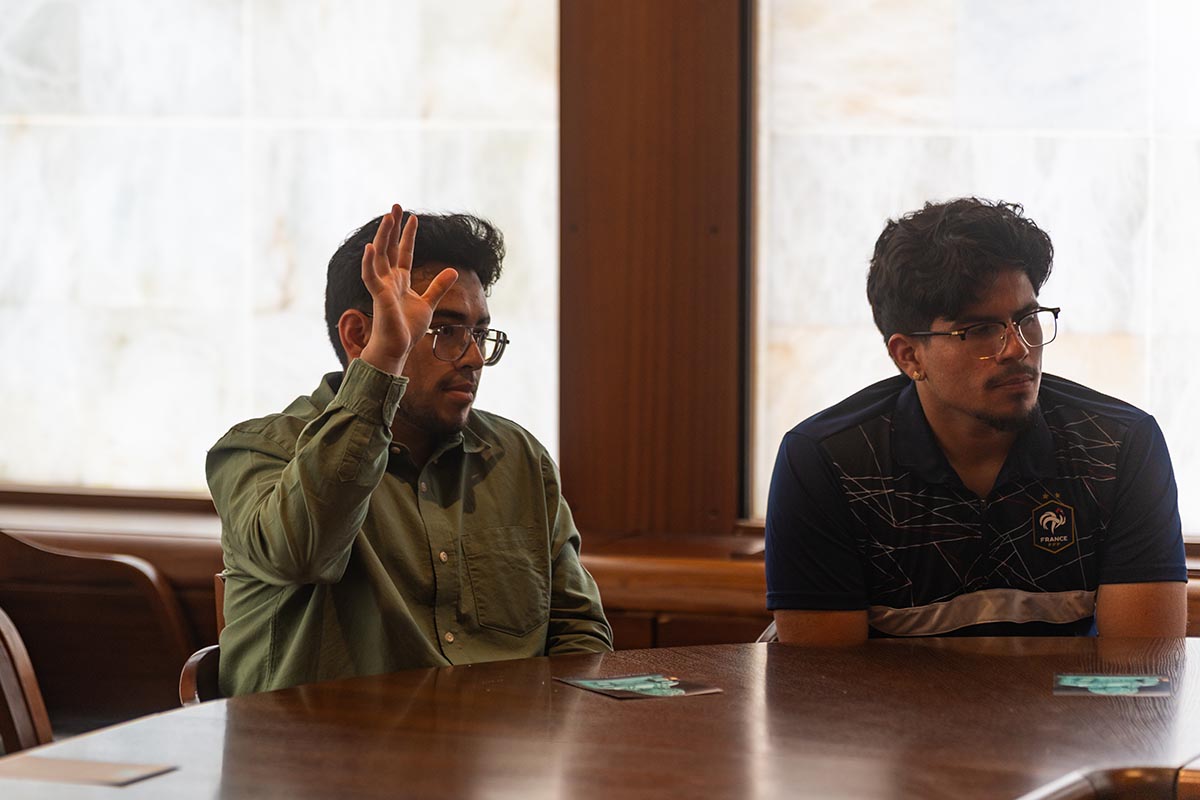
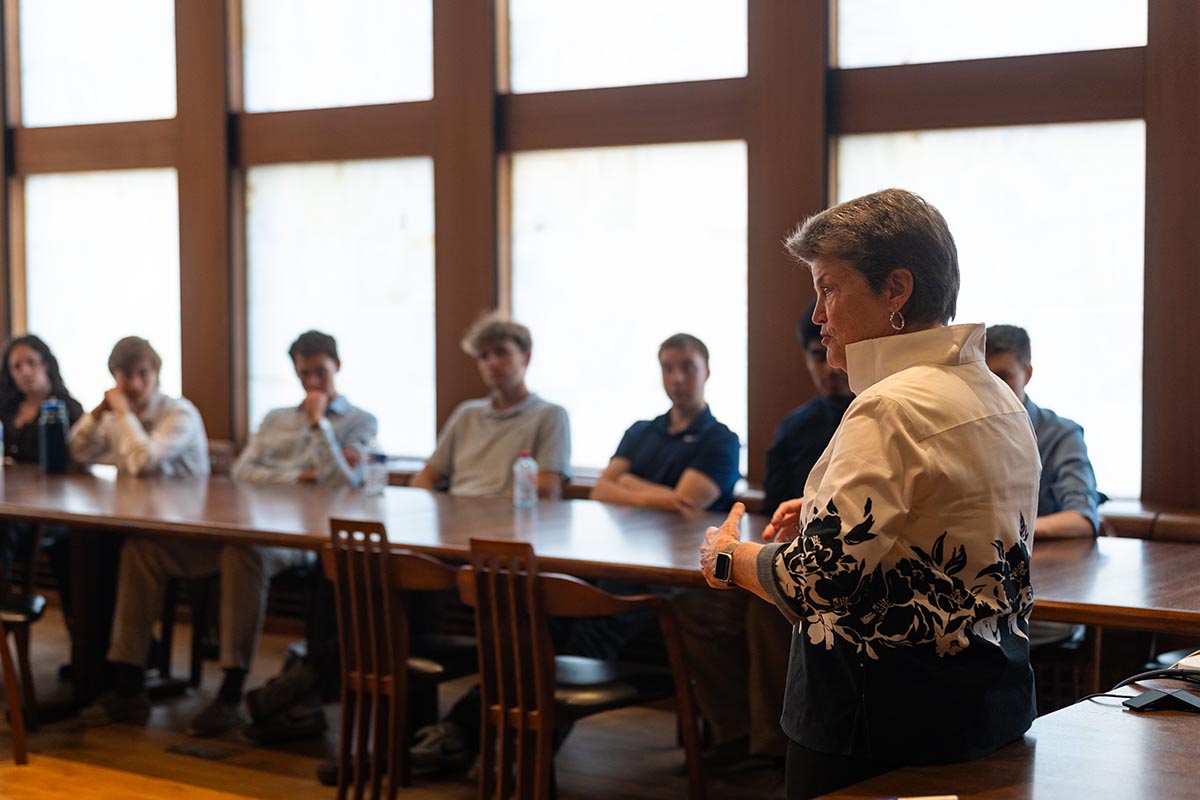
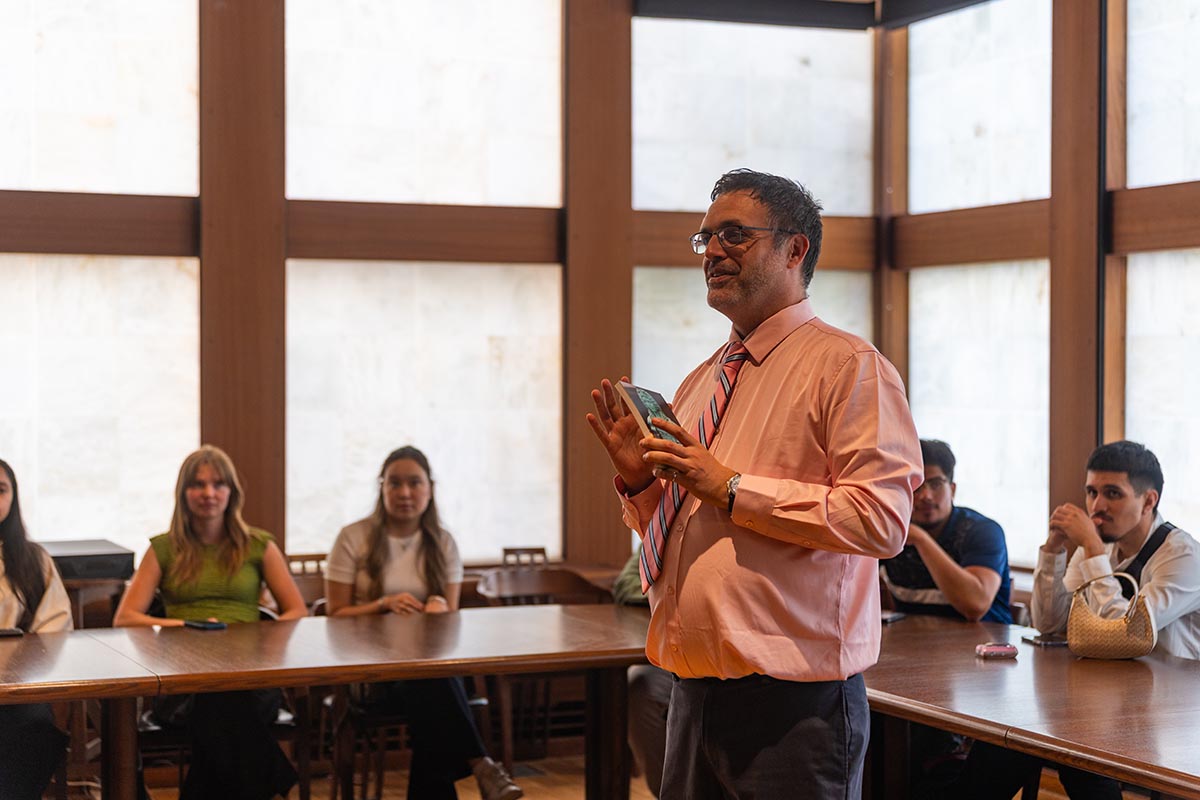
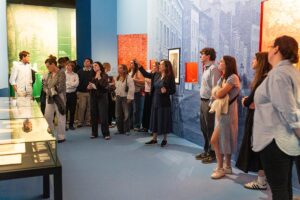
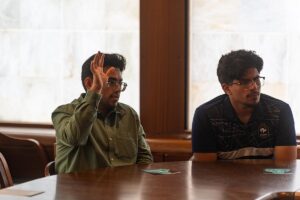
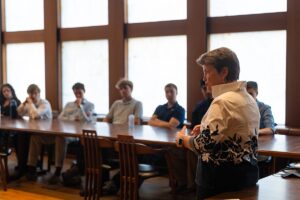
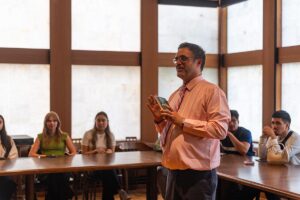
Forty Lafayette students studying abroad in Bonn, Germany, and Madrid arrived in Paris April 8 for a guided tour of the exhibition from Duhl and a day of dialogue with classmates, alumni, and faculty members Hannah Stewart-Gambino, professor of international affairs and government and law, and Michael Senra, associate professor of chemical and biomolecular engineering and chair of the dual degree program in engineering and international studies.
Two separate class discussions were held that afternoon to explore the themes of the Paris exhibition. The second-year engineering students weighed in on a range of related topics from the ideals of the Marquis de Lafayette and what it means to be human, to what it means to be a Lafayette engineer—including having a better imagination of the unknowns. “We talked a lot about globalization,” said mechanical engineering and international studies major Ricardo Jimenez Pina ’28, who is from Phoenix. “As an engineer, that makes me more empathetic toward problems that people have in their local community.”
Stewart-Gambino, a political scientist, noted how the experience resonated with students: “Democratic systems are built by human beings, and this is no different in 2026 than it was in 1826. We are all responsible and accountable—no matter your moment in history, you build the world that you want to live in.”
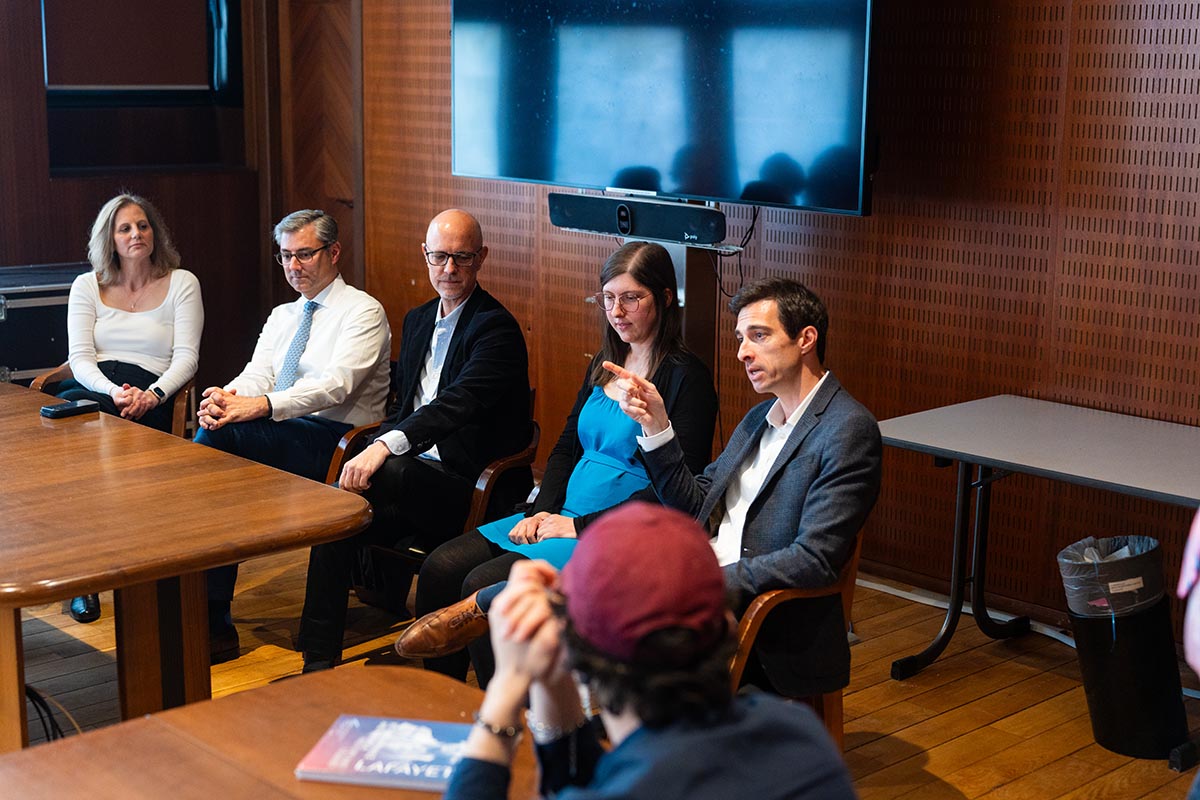
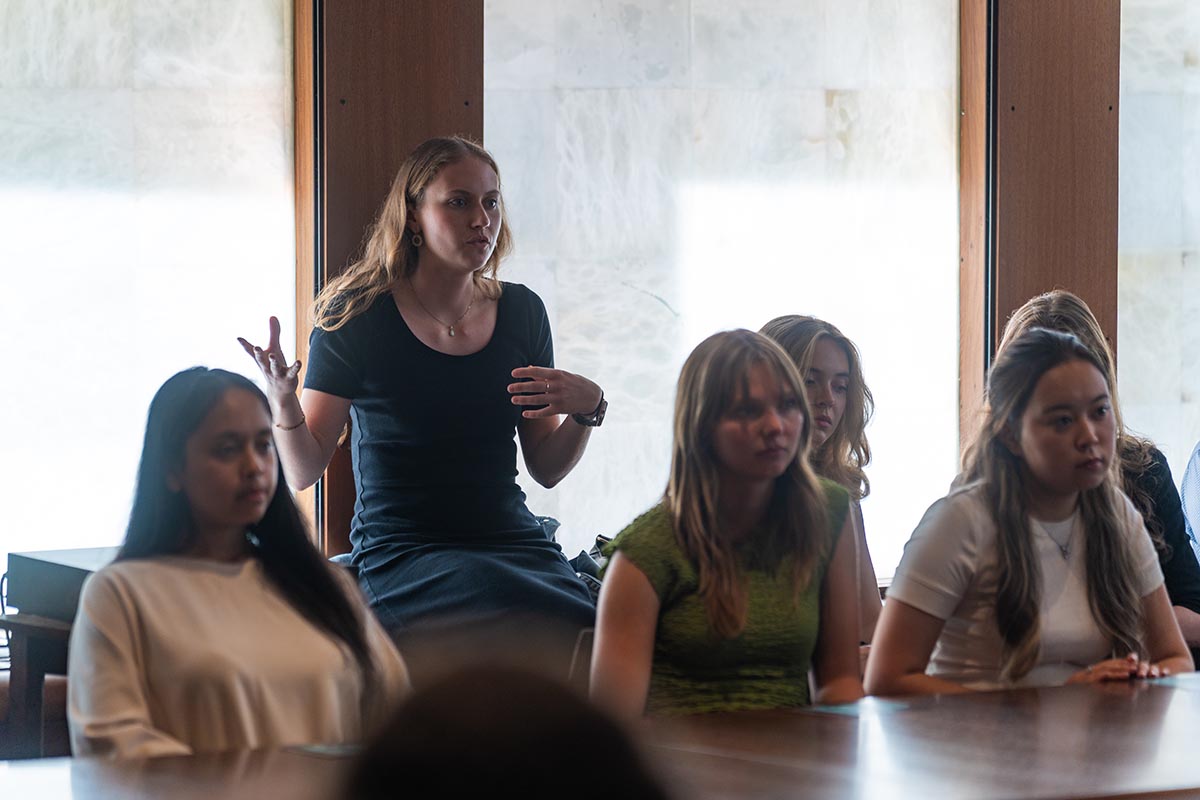
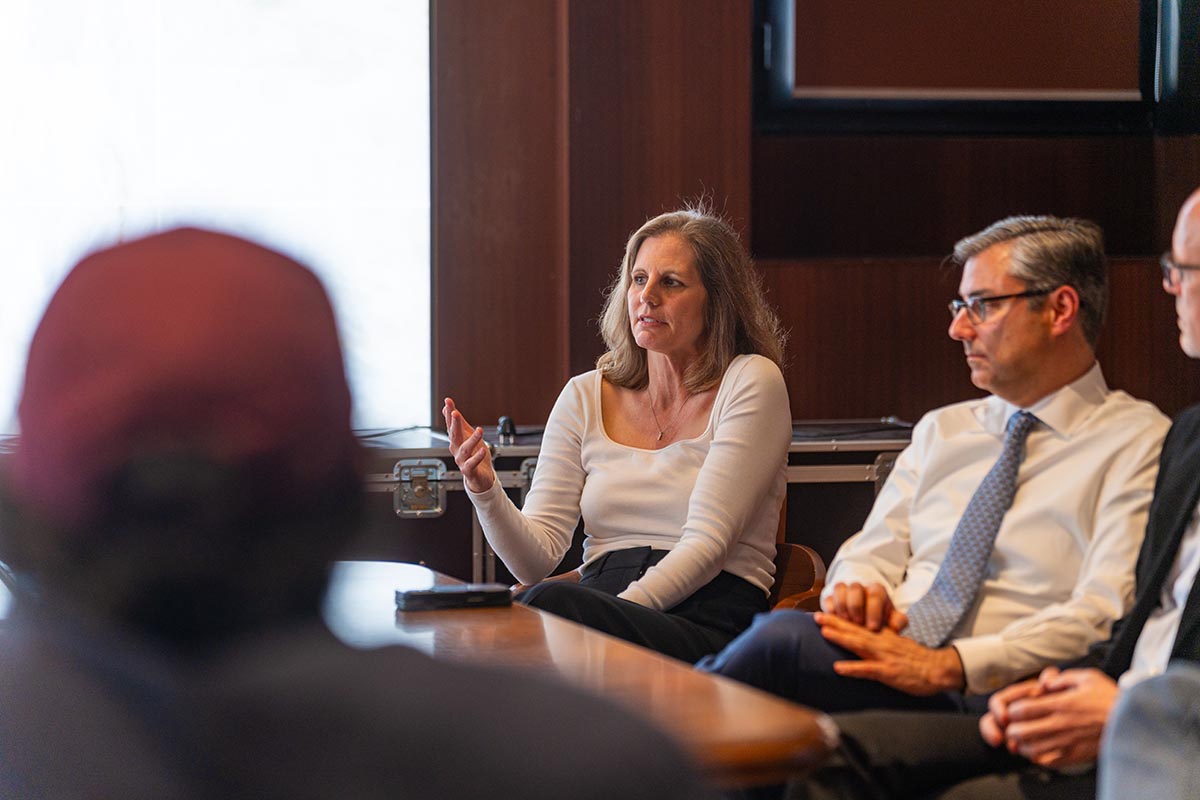
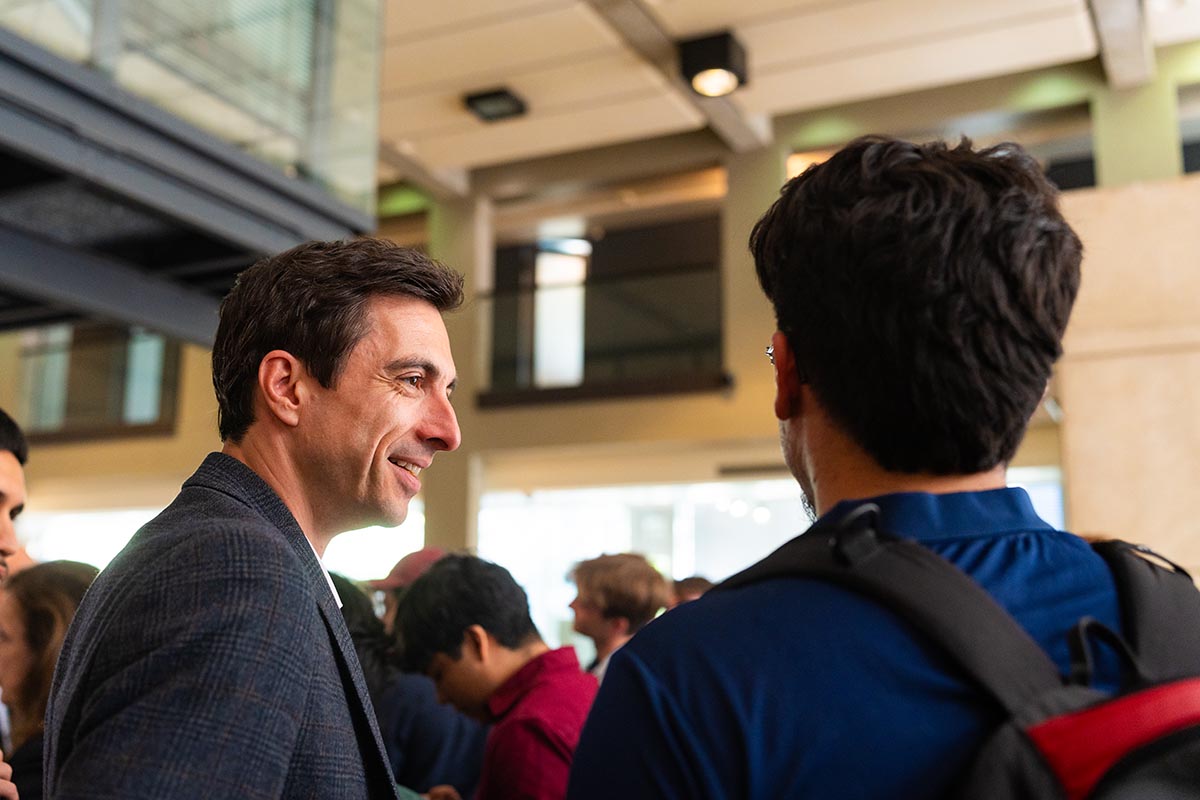
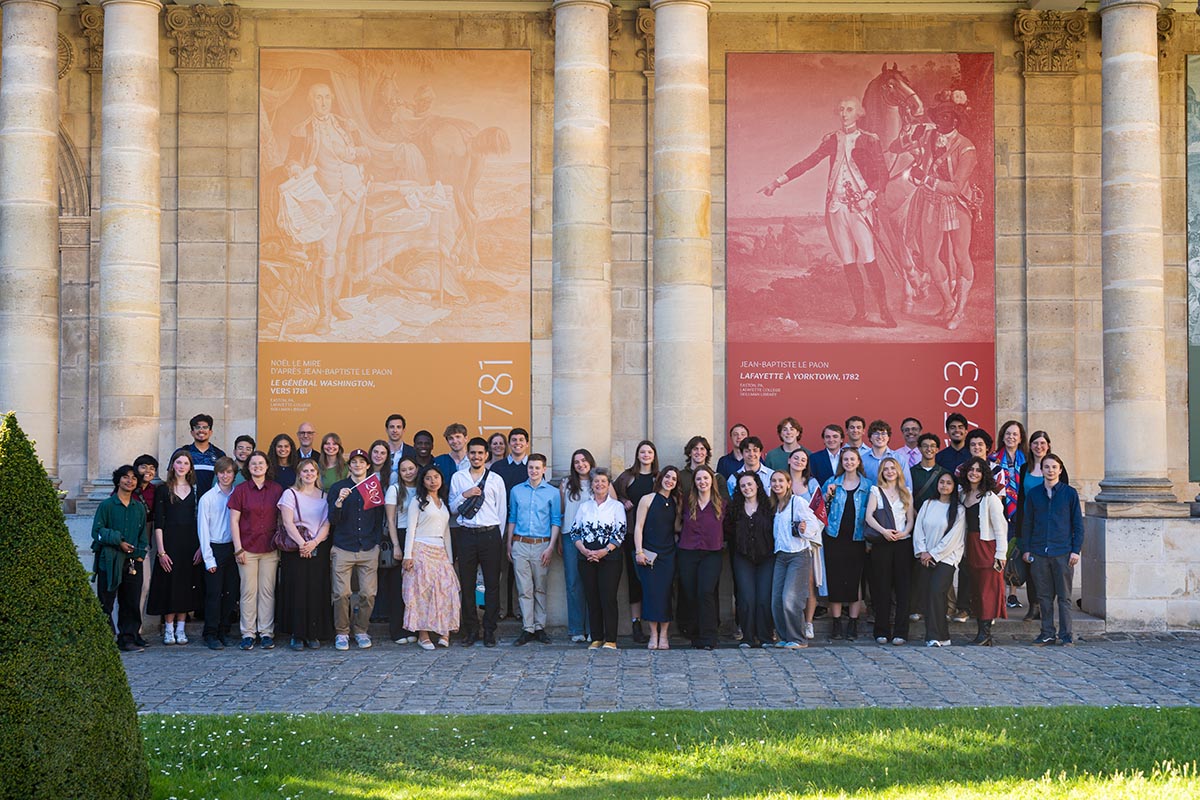
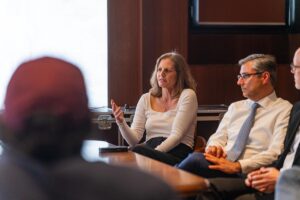
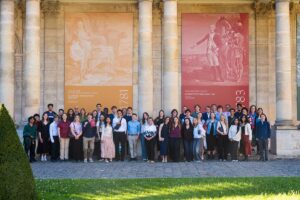
“Globalization is something crucially important for Lafayette graduates, whether they’re majoring in languages, economics, or engineering,” Senra says. “This is work that a whole host of individuals on Lafayette’s campus are championing to ensure the fact that global education, and the global mindset, is an important skill set for any Lafayette student to have.” The students visiting Paris wrapped up their time at the National Archives by moving to a conference room on-site and engaging in a 60-minute panel discussion on this topic.
The “Future of Globalization” conversation was guided by the expertise and advice of alumni: Linda Assante Carrasco ’90; Benny Crapanzano ’97; Patrick Dieterich ’93; Alicia Clark ’11; and Gabriel Valentin ’02. “Learning about different cultures, and speaking different languages, is only going to serve you as you build your career,” Dieterich said.
Valentin, who was an international student from France at Lafayette, spoke about being curious beyond majors and minors—and the value of doing so as a student: “Be curious at this young stage, because you develop your way of thinking,” he said, “and that will have a lot of different advantages later.”