August 17, 2026
Prof. Jenn Stroud Rossmann releases new book, Worldbuilding: The Engineering Imagination
By Bryan Hay
Jenn Stroud Rossmann, Jeffers Dean of Engineering and Baird Professor of Mechanical Engineering
Worldbuilding: The Engineering Imagination, published by Polity Books.
Release: Sept. 1, 2026
Worldbuilding: The Engineering Imagination, a summary:
‘Worldbuilding’ is commonly associated with fiction writing or filmmaking: It means the craft (art and science) of creating a persuasive fictional setting, fully imagined from the big picture rules and geography to the smallest details of daily life. ‘Worldbuilding’ is also what engineering does in terms of creating the infrastructure, processes, and products that ‘make society durable’—and it also needs to be ‘fully imagined,’ thinking beyond the merely technical and to consider all the possible impacts of technologies. A common pitfall for both novelists and engineers is to get hung up on a particular part of the world they’re building without fully imagining other aspects. For a novelist, such blind spots result in unpersuasive art; for an engineer, they may mean ‘unintended consequences’ from environmental damage to systemic inequality. In both cases, I argue, these blind spots are failures of imagination. This book aims to enlarge our imaginations as, and about, engineers.
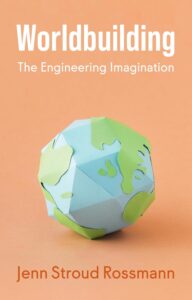
Worldbuilding: The Engineering Imagination, by Prof. Jenn Stroud Rossmann, will be released Sept. 1
As an engineer and a fiction writer myself, I appreciate the importance of imaginative storytelling in the development and adoption of new technology. This book reconsiders the history of technology (expanding the traditional understanding of who engineers are and what they’re responsible for) in order to enable us to imagine more just, inclusive, and fully imagined futures. By interrogating the mythology of engineering heroism, we can identify problematic biases masked as “neutral” technological “triumphs” and envision a more inclusive, collaborative mode.
What inspired you to write it, and how will people at Lafayette and beyond benefit from reading it?
I had the opportunity to develop a course about the cultural history of technology in America, cross-listed in engineering and American studies, and I was excited to share my enthusiasm about transformational technologies and my interest in the way those technologies were both shaped by and shaped society and culture. Teaching that class over time, and being committed to the linked goals of interdisciplinarity and inclusion, have inspired this book.
This project pays attention to the way the story of engineering has been told—not just by engineers and historians, but also by novelists, artists, filmmakers. It encourages engineers to be careful, critical readers of these stories, and allow that these authors may see our work and impacts differently than we see ourselves. In the essay series I have written for Public Books, An Engineer Reads a Novel, I use literary analysis of classic and contemporary novels to critique the role, responsibilities, and culture of engineering. The story of, for example, the automobile in America is not just the story of Ford and Sloan but also of Fitzgerald, Steinbeck, and Kerouac; Robert Moses and June Jordan; Hopper and O’Keeffe; Thelma and Louise; of Green’s book for “negro motorists.” I think by expanding the history of key technologies and including perspectives from writers and artists, we will expand the cast of characters of this history and the imaginative capacity of engineers who learn it. I also hope readers will learn more about how engineers do our world-building, and may expand their own imaginations about who engineers are and what we do.
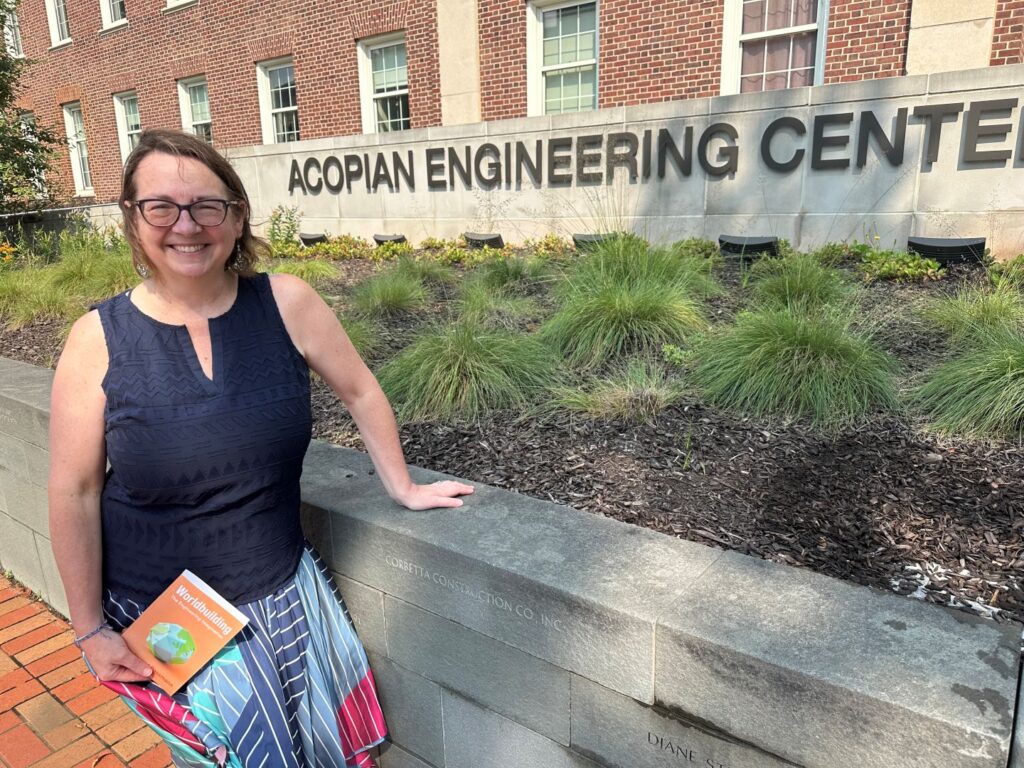
Prof. Jenn Stroud Rossmann | (Contributed photo)
How will your new book enhance your work at Lafayette?
The book makes concrete proposals for changes to engineering education, and for the inclusion of engineering in liberal education for all students, that will prepare technological citizens to harness their powers in service of their values, in order to construct a future more inclusive and equitable, less extractive and exploitative, and more hopeful. Generally speaking, engineers are not in it to claim fame or glory for themselves; they would like to improve upon situations and help address problems and improve lives.
It’s a creative and collaborative art to be an engineer. This is what excites me most about it. You get to use your imagination. You get to work with others from whom you’re learning. Every engineer has different kinds of expertise or different world experiences that have shaped their perspectives. And getting to listen to each other and imagine together is such a human connection at its core.
Where is it available?
The book can be ordered directly from Polity or Wiley, from online and local booksellers, and, thanks to Darrell Parry, is available at the Lafayette College Store.
Categorized in: Engineering, Faculty Profiles, Featured News, Mechanical Engineering, News and Features