October 20, 2026
Prof. Xu Ma releases new book, ‘Boundaries and Bodhisattvas’
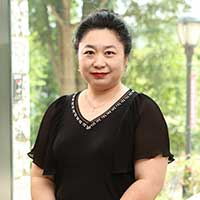 Xu Ma, assistant professor of religious studies
Boundaries and Bodhisattvas: Women, Lay Buddhism, and Religious Spaces in Late Imperial China
Released Aug. 12, 2026
Boundaries and Bodhisattvas, a summary:
My book explores how religious and social spaces were made possible for women in a patriarchal society that increasingly sought to regulate and subordinate them. Focusing on late imperial China from roughly the late 15th through the 19th century, it examines a tension between ideals of female seclusion and women’s expansive participation in a flourishing Buddhist culture.
Confucian gender norms traditionally associated men with public and political life, and women with the domestic sphere. In late imperial China, Neo-Confucian moral discourse further reinforced ideals of female chastity, marital fidelity, and moral discipline, along with expectations that women remain secluded within their inner quarters. Yet the boundary between inside and outside was neither absolute nor immutable; it could be negotiated, suspended, and, at times, even nullified through women’s religious devotion and embodied practices.
Within this patriarchal order, Buddhism opened possibilities for imagining and negotiating women’s religious participation beyond domestic confines. Literary representations of women undertaking distant pilgrimages, visiting temples, and attending religious festivals reveal how Buddhist devotion could complicate the prevailing principle of gender segregation. Examining these representations alongside embodied practices, my book addresses a central question: How did religious space simultaneously sustain and subvert gendered spatial boundaries, making women’s movement across them not only imaginable but even socially permissible?
The first half of my book examines how religious spaces emerged as a third social space, operating both within and beyond the physical boundaries between inside and outside. Pilgrimages and temple visits could expand women’s social worlds, while self-fashioned devotional spaces within the home could loosen the constraints of domesticity without requiring women to leave it physically. Through women’s engagements with these architectural spaces, I explore how their religiosity could circumvent, stretch, and sometimes transcend the spatial boundaries of domestic life.
The second half turns to women’s bodies as symbolic religious spaces. Through literary representations and ritual practices, it examines how women’s bodies, whether purified or putrefied, could participate in and preside over the making of sacred sites, acquiring spiritual and cultural afterlives that unsettled the boundaries between private and public. More broadly, the book explores how Buddhism maintained its vitality amid Neo-Confucian moral critiques and how lay Buddhism competed with Confucianism for women’s religious and moral allegiance. I argue that Buddhism cultivated a profound affinity with women and their devotional lives, a relationship that enabled it to not only survive but flourish in late imperial China.
Where is it available?
The book is now available in paperback and hardcover editions, and will be available as an ebook in 2028. It can be purchased on the University of Washington Press website as well as on Amazon.
Why did you write this book, and why should people at Lafayette and beyond read it?
The book grew out of my dissertation and a long-standing interest in the intersection of gender, religion, and literature. I brought together stories and dramas, biographies, historical records, and archaeological evidence, including research on tombs in China. Reading these materials together allowed me to explore how women’s bodies became sacred spaces, and how their religious lives were represented and remembered. I hope the book speaks to scholars and students across religious studies, gender studies, Asian studies, history, and literature, as well as readers interested in how people pursue meaningful lives under restrictive social conditions.
One reason these histories matter is that religion could both emancipate women and impose confinements to harm their well-being. I wanted to take that tension seriously. Women’s devotion cannot always be understood as either submission or resistance; the same practice could affirm a moral expectation while creating room for a woman’s own aspirations. Attending those possibilities helps us see women as people making difficult choices within unequal circumstances. Their experiences invite us to ask what flourishing means when the opportunities available to someone are also shaped by the structures that constrain her.
How will this research impact your work and/or classroom at Lafayette?
My research and teaching continually reshape one another. Boundaries and Bodhisattvas informs and enriches courses such as REL 233: Female Divinities and Demons in East Asia, REL 218: Confucianism: Self and Society, and REL 312: Religious Body and Sexuality. Bringing the book into the classroom invites students to reconsider gendered boundaries not as static or immutable, but as continually constructed, negotiated, and sometimes subverted through religious imagination, literary representation, and embodied practice. Meanwhile, integrating my research into the classroom allows students to see knowledge not as something fixed and finished, but as something continually questioned, interpreted, and reconstructed. Just as my scholarship enriches their learning, their curiosity and fresh perspectives often inspire me to rethink my own questions.
Is there anything else we should know?
The research for Boundaries and Bodhisattvas was supported by a highly competitive Luce/ACLS Early Career Fellowship in China Studies.
My second book project, Making and Unmaking Goddesses, extends the questions of my first book to an even more fluid boundary: that between woman and goddess, human and divine. Drawing on local goddess cults, rituals, literary narratives, and visual representations in China and Taiwan, I explore how ordinary women and other ambiguous female figures could be imagined and revered as divine, while goddesses, in turn, were humanized and domesticated through stories of marriage, motherhood, kinship, and genealogy. Rather than treating divinity as a fixed identity, I examine how it was continually constructed, negotiated, and transformed. Like my first book, this second book project has also been enriched and inspired by my teaching.

Categorized in: Academic News, Faculty and Staff, Faculty Research, Featured News, News and Features, Religious Studies, Research