November 6, 2026
From concept to gallery: Lafayette students help shape an art exhibition
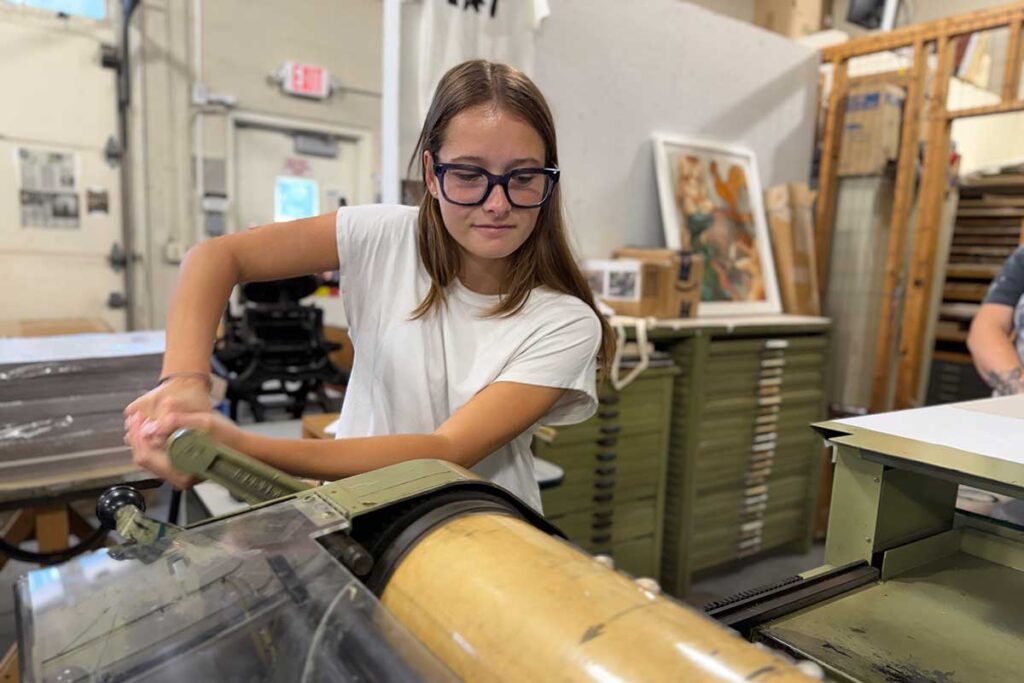
Students in Prof. Eric Hupe‘s ART 360 seminar had the opportunity to use equipment like the Vandercook Universal I press in Lafayette’s print shop to study and create their own prints. | Photo provided by Eric Hupe
By Stella Katsipoutis-Varkanis
Throughout campus, Prof. Eric Hupe is known for his immersive teaching style—especially for his recent work using virtual reality technology to recreate art historical sites, which was honored at a Bicentennial celebration this spring. Now, he’s turning his upcoming art exhibition into a living, breathing classroom for his students.
This fall, students in his ART 360: Renaissance Prints Age Dürer seminar have worked alongside Hupe and Kath Yarkosky, adjunct professor of drawing, to research, create, collect, and prepare works that will ultimately become part of the Albrecht Dürer and the Printed Image in the Lehigh Valley exhibit—gaining firsthand experience in the collaborative efforts behind bringing an art exhibition to life.
“For me, as an art historian, it’s really important that students understand the materiality of the art they’re studying,” says Hupe, assistant professor of art. “Having them roll up their sleeves and actually create something is a level of understanding you cannot get from reading about it.”
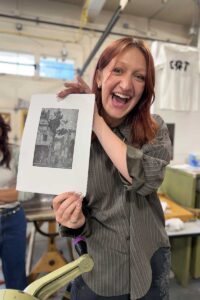
Rachel Tielking ’27 holds a print she created in Lafayette’s print shop during the seminar. Prints made by ART 360 students will ultimately become part of Hupe’s spring art exhibition. | Photo provided by Eric Hupe
Opening in early February in the Williams Center Gallery, Hupe’s exhibition will bring together prints by Albrecht Dürer, the influential German Renaissance artist often called the “Michelangelo of the North,” alongside works from Lafayette’s collection and loans from the Allentown Art Museum and Lehigh University Art Galleries. It will also explore connections between historical and contemporary printmaking—including work by Baltimore-based artist LaToya Hobbs—and examine Dürer’s artistic influence and the development of Renaissance printmaking.
The exhibition, Hupe says, isn’t just an opportunity to bring together an extraordinary collection of regional resources. It’s also an opportunity to give students an intimate role in the curatorial process. “Students are researching all of the objects in the exhibition, writing catalog entries for those works that will be published as part of a catalog with the exhibition, and writing wall text for the exhibition,” he says. Students are also participating in the acquisition process, researching works available on the art market in New York City, presenting recommendations, and helping determine which prints Lafayette should purchase for its collection.
Maggie Thompson ’28, an art history and anthropology and sociology dual major, says the experience has introduced her to the many professional possibilities that studying art history presents. “This class can be a great stepping stone for students interested in museum work, curation, or exhibition,” she says. “Prof. Hupe is really ambitious in his work, his course design, and all of it being student-centered.”
The students’ learning extends beyond research and curatorial work. Through a collaboration with Yarkosky, visiting assistant professor of printmaking and printer for Lafayette’s Experimental Printmaking Institute (EPI), students have stepped into the College’s print shop to experience the techniques and labor behind the objects they’re studying.
Yarkosky introduced students to the tools and processes of printmaking, including carving linoleum blocks, applying ink, and pulling prints on a Vandercook Universal I press. Students examined historical prints and made rubbings of watermarks to investigate where and when the paper was produced. This attention to materials is essential to understanding prints, Yarkosky explains. “Talking about the history of the paper is just as important as talking about the print,” Yarkosky says, adding that understanding the origins and production of paper can offer important clues about the history and authenticity of an artwork.

Hupe’s innovative teaching was honored at a special Bicentennial event in spring 2026. | Photo by Jami Farreira
The partnership exemplifies Hupe and Yarkosky’s shared belief that meaningful learning happens when disciplines and perspectives intersect. Yarkosky brings extensive practical knowledge of print production; Hupe, his expertise as an art historian. Together, they help students connect the historical significance of Renaissance prints with the physical processes that brought them into existence.
“Working with Eric and his students is so fun,” Yarkosky says. “It’s extremely powerful. It’s upbeat. We’re all moving, we’re all laughing, and we’re all thinking.” Hupe adds that the collaborative dynamic echoes the Renaissance workshops where artists, apprentices, assistants, and craftspeople worked together to produce works of art. “Teaching is the same way,” he says. “We benefit when we collaborate with others.”
Thompson says the experience reinforced one of the course’s central lessons: Printmaking is inherently collaborative. “From brainstorming to editioning, or to simply cleaning up—it’s never a one-person job,” she says. Her experience having previously taken a Printmaking I course and her experience with historical research in Hupe’s seminar, she adds, has deepened her understanding of the materials, techniques, and possibilities of printmaking. “It’s opened my eyes to what I would now consider my favorite medium,” Thompson says. “It’s been incredibly enriching.”
She also appreciates the opportunity the course afforded her to exchange ideas with her classmates. “We spend most classes discussing, and through these discussions I often find myself arriving at conclusions differing from my original stance,” Thompson says.
What’s especially meaningful to Thompson about the opportunity, however, is the students are not simply learning about the decisions shaping museum collections and exhibitions. They are helping make those decisions themselves. “I think Lafayette’s size and focus on undergraduate work are the main reasons these courses are such a success,” she says. “It allows for student involvement on an unprecedented level.”
Categorized in: Art, Faculty Research, Featured News, Innovative Teaching and Learning, Interdisciplinary, News and Features