May 7, 2026
Open heart, open mind, open world
By Margaret Wilson
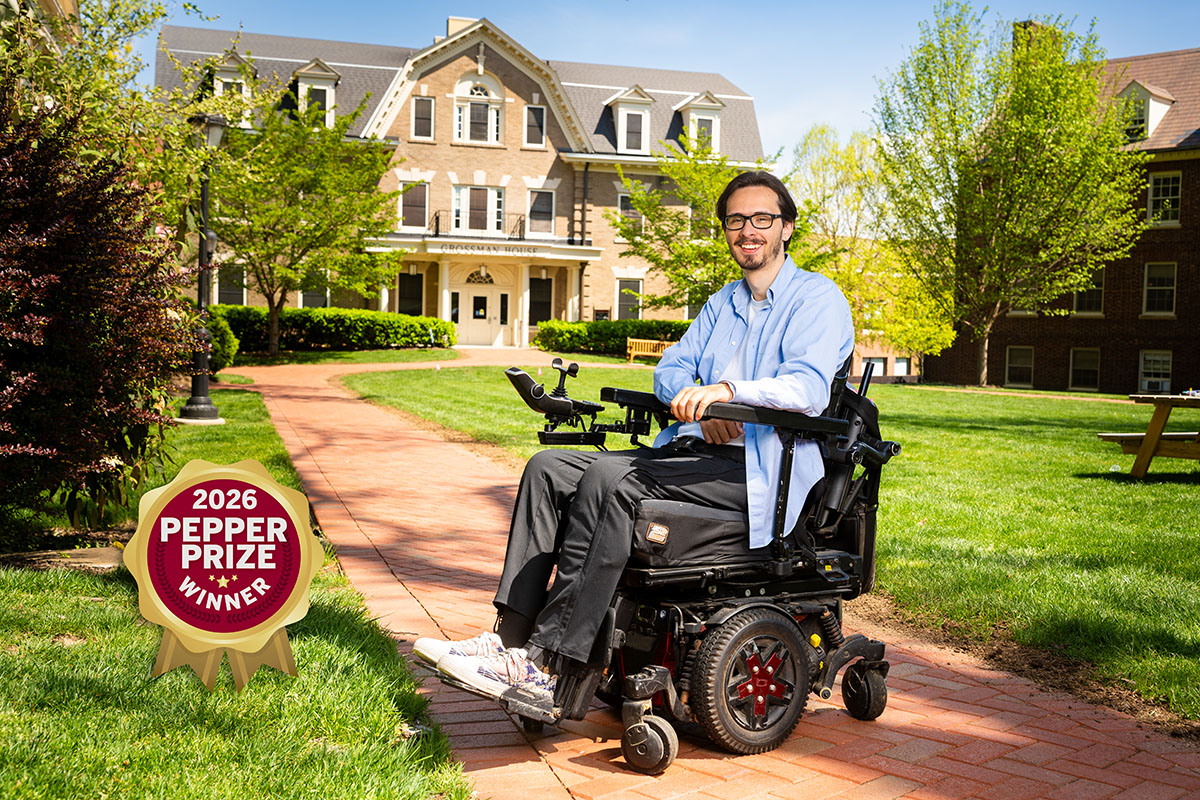
2026 George Wharton Pepper Prize recipient Dexter Kennedy ’26 | Photo by JaQuan Alston
His first year at Lafayette, it wouldn’t be out of the ordinary to find Dexter Kennedy ’26 hanging out in Farinon or Skillman whenever he had free time.
“I would put myself in a public space, and slowly but surely, I would run into someone. We would end up chatting,” Kennedy says. “Every year, I would say, I made a really good friend just by sitting at a certain spot in the library.”
These tendencies to make friends wherever he goes and to forge connections with all kinds of people are part of why Kennedy believes he was chosen as the 2026 George Wharton Pepper Prize recipient.
“I’ve really tried to maximize my time here,” Kennedy says. “It’s really gratifying to just feel that a number of students have recognized me as an individual, and the work that I’ve done in different spaces.”
The spaces in which Kennedy has had an impact are far-reaching. Kennedy, who uses a wheelchair as a result of an injury in 2021, has used his talent for relationship-building to advocate for improved accessibility, both on campus and during his two experiences studying abroad. His first semester at Lafayette, Kennedy emailed President Hurd to set up a meeting, and that initial conversation has led to a regular relationship between the two throughout Kennedy’s undergraduate experience. It also led to a series of discussions with President Hurd and other members of senior leadership about improving campus infrastructure for students with disabilities.
While the work of accessibility improvements is ongoing, Kennedy is happy to have had an impact on the way Lafayette’s campus approaches accessibility.
“Just being here and being visible and trying to get involved in everything, really made everyone look and ask, ‘Oh, how would we do that?’” Kennedy says. “‘Does this place have a ramp? Does it have an accessible entrance? How would Dexter get here?’”
“The impact of my work is really just one-on-one conversation.”
As a psychology and art history double major, this kind of personal connection is a common thread of Kennedy’s experience. While his original ambition to be a therapist has shifted during his education, his talents for listening, engaging, and inspiring stay strong, most notably with the international student community.
“It was one of those things where I had one friend who knew a couple [international students], and then they introduced me to my other best friend, who is from India,” Kennedy says. “From there, I started to meet more international students and domestic students who are interested in international things. It was just a really wonderful community that was really kind and accepting.”
Kennedy got involved in the International Students Association (ISA), eventually becoming a Conversation PARDner and English for Academic Purposes (EAP) mentor to help improve English skills, as well as a Global Ambassador for study abroad. He is also a member of the Chorduroys a capella group, and has participated in Salsa Club and a variety of other extracurriculars.
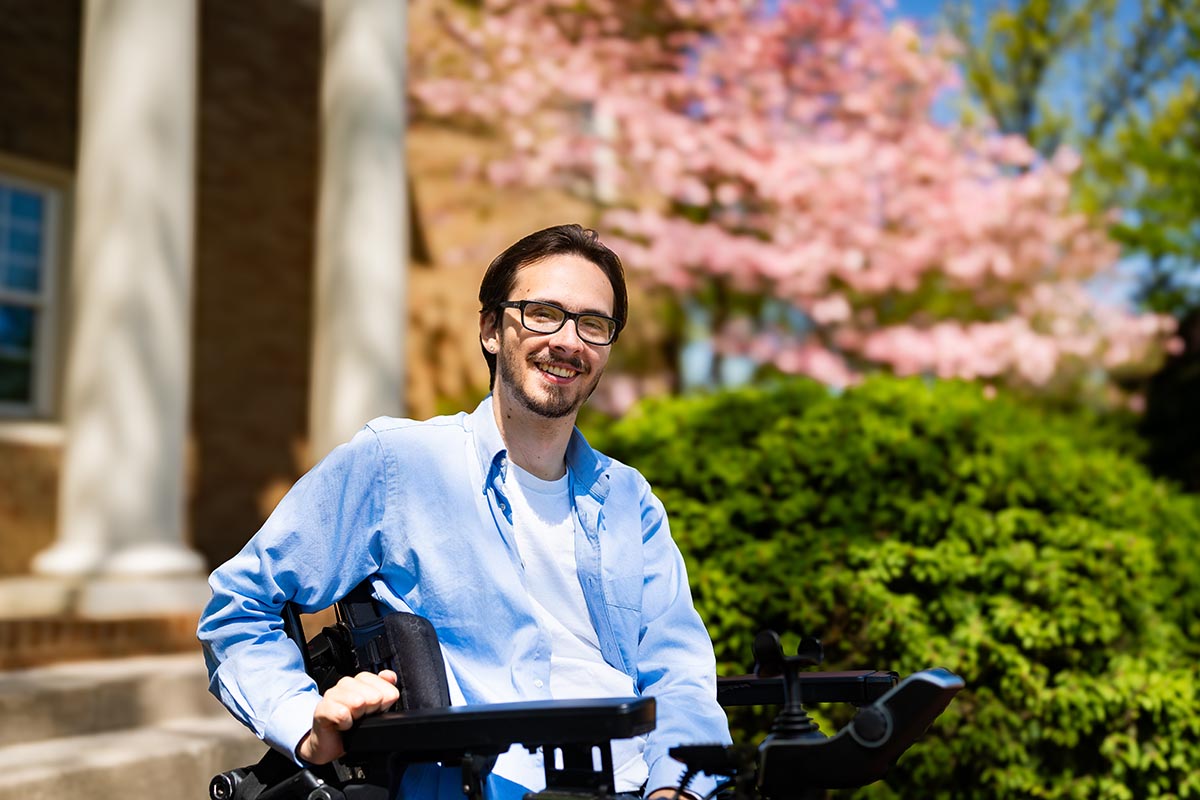
Photo by JaQuan Alston
Whether in psychology or art history, Kennedy is constantly in pursuit of understanding not only people, but culture. A frequent attendee of arts performances and other events on campus, Kennedy has made a point to take advantage of all the opportunities Lafayette has to offer, something he can’t imagine his time here without.
“I just love going on the Quad, running into different friends, being able to see different people. Everything’s so centralized, and there’s so many things happening on campus. I really do try to take advantage of every opportunity presented,” Kennedy says. “If you really have the energy and the effort to go and be somewhere, you can cultivate connection anywhere you want to, and I’m incredibly grateful and lucky to have had that experience here [at Lafayette].”
Now, he’s planning to use his passion for people and culture to pursue a master’s degree in international education at New York University after graduation.
While New York City will be a big adjustment compared to Easton, Kennedy is excited to take the risk. The opportunity to study abroad during his time at Lafayette, once in London for an interim trip and again in Amsterdam, helped build his confidence. During his time abroad, he began working on advocacy centered around inclusive travel and disability awareness.
“[Studying abroad] was a big moment of ‘OK, if I can do a foreign city, I can figure out New York,’” Kennedy says.
For Kennedy, receiving the Pepper Prize is a chance to see, in real terms, the impact he has had on his peers.
“So many people just need to be listened to. When I can, I try to be that person for others,” he says.
This talent for building true connection has been the undercurrent of Kennedy’s life. Whether it came in the form of support from his family and hometown after his injury, the mentorship of faculty and staff across Lafayette’s campus, or the welcoming embrace of his fellow students, Kennedy continues to forge a path of openness and understanding wherever he goes.
“I feel like I am the culmination of the people in my life, and I’m just happy to be a representation of their care, love, and effort. And honestly, that’s how I view my success—as a buildup of all the support I’ve gotten.”
Kennedy’s experience at Lafayette is a testament to the opportunities available to anyone who is willing to take a risk and embrace vulnerability, a message he hopes to convey to his peers and prospective students.
“You can cultivate any relationship, cultivate any connection, cultivate any experience if you put in the effort, attention, care, and time,” he says. “Lafayette has all the facilities for success. It’s just about going out and finding it, connecting with the right people, and it will happen.”
Categorized in: Academic News, Art, Class of 2026, Commencement 2026, Featured News, News and Features, Psychology, Student Profiles, Students
Tagged with: Pepper Prize